Default style- Alternative style

Supergroup Rising: Lorquin’s Admiral and the Return of Desert Rock Majesty

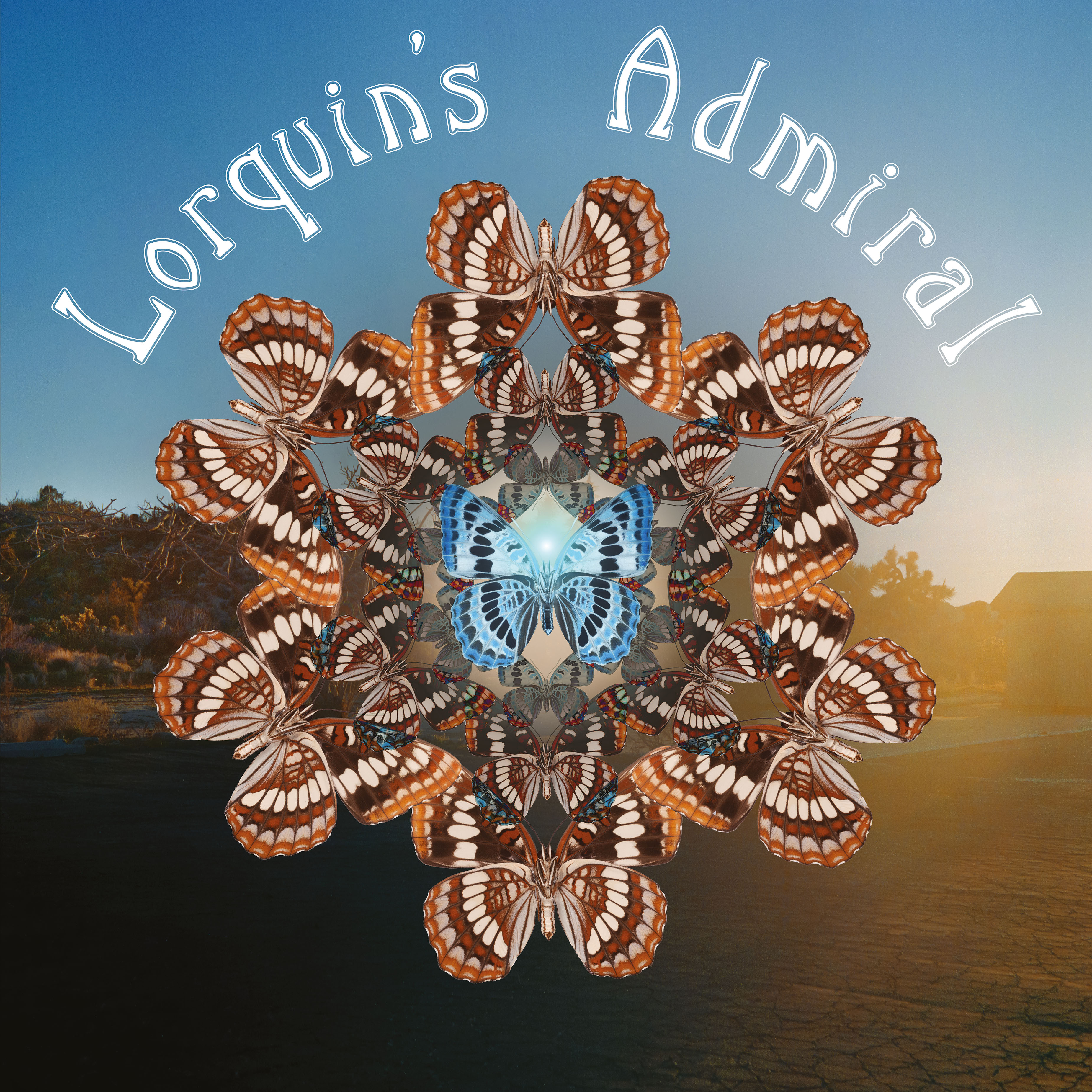
album_cover_art.jpg

Another remarkable album has arrived, born from the collaboration of Dandy and Dawn Brown alongside legends like Marlon King, Nick Hannon, Steve Earle, David Angstrom, and Country Mark Engel. Lorquin’s Admiral, a supergroup, released their debut album on June 27, 2025, under Argonauta Records. The album blends the best traditions of desert rock, psychedelic, and alternative rock. It evokes the spirit of the ’90s while delivering a fresh and energetic musical experience.

The tracks “My Blue Wife” and “My Blue Husband” contain some of the deepest emotional layers of the album. These songs present a unique storytelling approach by alternating male and female perspectives, enriching the album’s complex and multifaceted soundscape. The harmony of vocals and instrumentation provides an intense, intimate experience, revealing the album’s most profound feelings.

The track “Aren’t We” creates a deeply contemplative atmosphere. The minimalist video, dark tones, and the band’s intense emotional performance invite the listener on an inner journey where the song’s philosophical questions unfold.

“Inexplicable Things” stands out as one of the album’s most dynamic and experimental tracks. Its video portrays the band in surreal, dreamlike landscapes and scenes, visually echoing the song’s complexity and heavy psych-rock style. Both videos are essential parts of the band’s artistic expression, offering deeper insight into the emotional and philosophical content of the songs.

Finally, “Burn and Heal” is a powerful, dynamic track exploring the duality of pain and renewal. The ebb and flow of the melodies combined with intense guitar work convey a healing energy, speaking simultaneously of loss and new beginnings.

 The sound is warm, featuring analog fuzz, groovy drums, and occasional post-rock-like ambient moments (as in “These Lovely Things”). According to critics, the album carries both the purity of desert-stoner rock and the emotional soundscape of alt/psychedelic music — and most importantly, it is highly accessible, filled with harmonies, melodies, and riffs.

Overall, Lorquin’s Admiral’s debut album is a rich, emotionally layered work that pays tribute to the desert and stoner rock traditions of the ’90s while expanding the genre’s boundaries with fresh and exciting approaches. Its warm sound, the harmony of melodies and riffs, and the deep emotional charge offer an experience recommended not only for stoner rock fans but also for lovers of psychedelic and alternative music.

Inspired by this outstanding work, an interview was also conducted with the band members, providing an even deeper look into the background and creation process of the album.
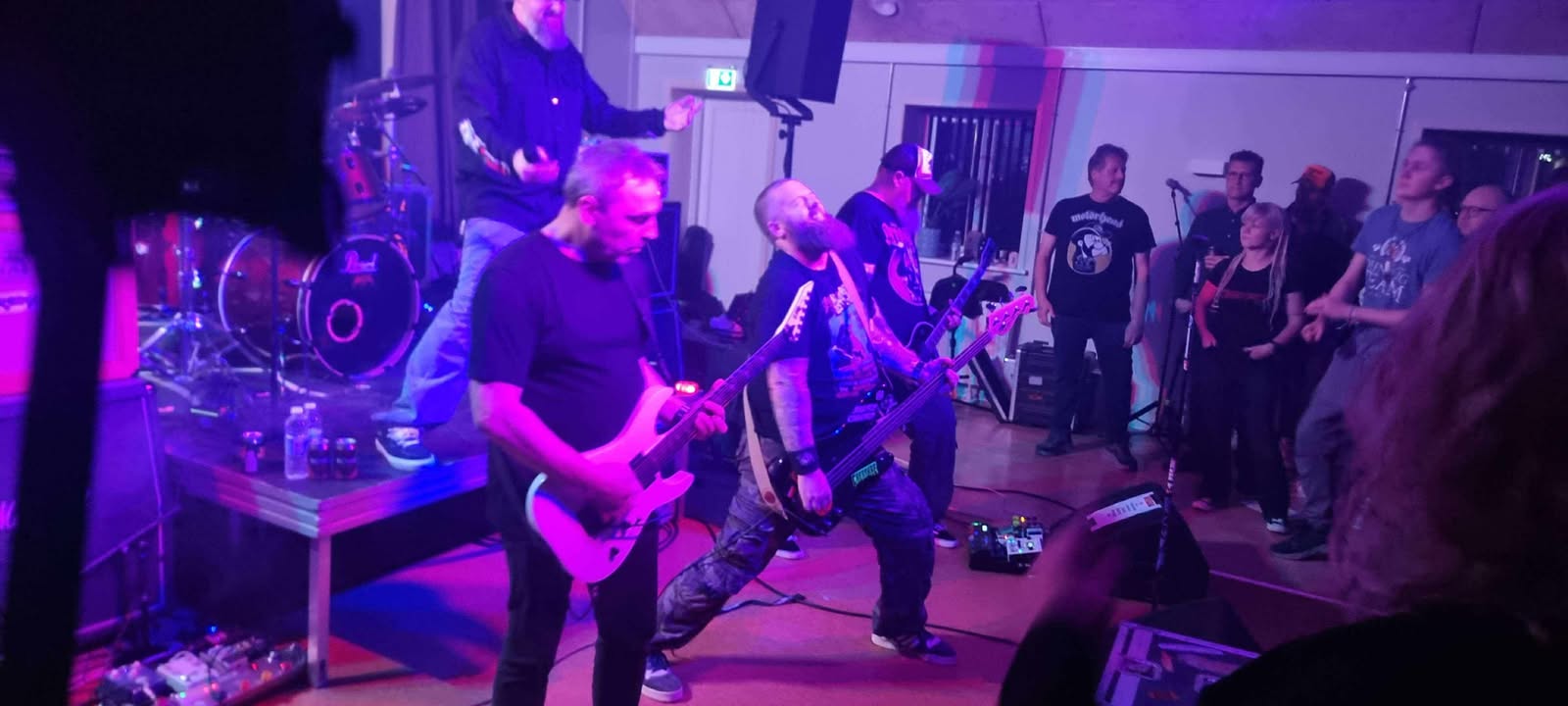
band_photo_2025.jpg

I’m curious about the origin story of Lorquin’s Admiral. Did the songs come first and then you looked for musicians to join, or did someone suggest creating a new band from the beginning?

Dandy Brown: Back in 2017, I was asked to contribute to the Yawning Sons project that Nick Hannon and Marlon King were putting together.  Eventually, those recordings would become the Sky Island release.  Nick and Marlon are the founding members of the group Sons of Alpha Centauri, and along with members of Yawning Man, they had done a previous album entitled Ceremony to the Sunset back in 2009.  Being a fan of Sons of Alpha Centauri, Yawning Man, and the first album they recorded together, it was a real honor to be asked to sing on a few tracks for their project.  After contributing to the Sky Island sessions, Nick, Marlon, and I felt such a comfort in writing together that we decided to see if we could construct another album.  We spent about a year passing riffs back and forth, and eventually gathered enough material to start putting together the Lorquin’s Admiral album.  Throughout that process, I had started recruiting people I thought would sound terrific on the album.  For some of the songs, it was very obvious that Dawn’s voice would fit perfectly.   I also knew that Steve Earle’s drumming style would be a perfect fit, and that Dave Angstrom and Country Mark Engel would be able to fill critical roles on the record.  Really, everything fell together so organically and easily that it’s almost like Lorquin’s Admiral was a band far before this first album.  Sometimes, it’s just that easy.

The lineup features legendary musicians, each with a very distinct style. What was it like working together in such a creatively rich environment?

Dandy Brown: Quite honestly, I have to be one of the luckiest musicians and producers on the planet because I have always worked with great performers on just about every project I have ever been involved with.   From Hermano to Orquesta del Desierto to the Fizz Fuzz to Lorquin’s Admiral, every major session that I have worked on has been comprised of musicians who have distinct and wonderful styles that add to the music.  When it comes right down to it, as far as musicianship goes, I usually feel like I am the weakest link in the room.  I mean, how does one compete with vocalists such as John Garcia or Pete Stahl?  Those guys are absolutely phenominal singers.   I have had the absoute honor of being able to produce sessions where Mario Lalli or David Angstrom or Country Mark are playing guitar.   In other sessions, I have been able to track Steve Earle or Alfredo Hernandez on drums.   I mean, come on, all of those folks are absolutely incredible at their craft.  I have also had the ability to work with great engineers such as Dan Lucas, Mike Riley and Chris Koltay.  One of the things I always tell people is that my secret to making albums is to surround myself with musicians who are badasses . . . people who can take the kernal of an idea that I come up with and make it ten times better than anything I could ever do alone.  To anwer your question, though, working with the musicians I have been able to work with over the years has made all of my musical experiences absolutely wonderful.

The album feels incredibly cohesive – even though everyone involved brings a different style, you really managed to find a powerful common ground. Did the songs come together easily?

Dandy Brown: While we worked on the material for the Lorquin’s Admiral album for about a year before we went into the studio to record it, actually the songs came together very easily.  While I do not consider myself a virtuoso or even that great of a musician, I do believe that my strongest attribute comes with knowing how to bring together the right people for producing an album.   In this sense, when I get a feeling about which musicians and engineers will work well together then the rest always seems to flow very easily.  Lorquin’s Admiral was no different.  Once I heard the initial sketches for the songs that would appear on the record, I pretty much immediately knew who would fit into the soundscape we wanted to create. 

The album is so layered and dynamic that every time you listen, you discover new moods and sonic details. In your opinion, why don’t more albums like this get made these days? (With all due respect to the exceptions!)

Dandy Brown: That is quite a compliment about the Lorquin’s Admiral record.   It is always very important to me when producing an album that we are finding nuances and parts we can enhance to give the album more depth.   This isn’t to say that all albums or productions need to focus upon those kind of things because many albums are very beautiful and successful without subtle layers.  This has just always been my production style, but I have also worked on albums where everything was straight forward and done with minimal tracks.  I do think dynamic records are being made all the time and that this isn’t something unique to me.  I do think, though, that a lot of the music being produced and sold in mass has an entire formula behind it and that this formulaic type of music is what the majority of people want . . . thus the reason major labels provide that kind of music for public consumption.  Really, if more people wanted unique records then that’s what would flood the market.  Unfortunately, we don’t live in that world.   The world we do live in is one where most people want clones of something that has become popular previously.   There was a time when people sought out new and unique sounds and song structures.  I think that was a time before shows like America’s Got Talent came into being and they squeezed creativity out of the mix.   Let’s be honest, though, and realize that most people want something safe and easy when it comes to music . . . and art in general.  

Who came up with the name Lorquin’s Admiral (a species of butterfly)? Is there any particular meaning behind the name?

Dandy Brown: Actually, when we first started thinking about putting the Lorquin’s Admiral album together, I started looking for a name for the band and came across a web page that had all the various North American lepidoptera listed on it.  The name Lorquin’s Admiral just immediately popped out to me, so I wrote it down.   During the year where we were writing material for the record, we all contributed ideas toward the name, but at the end of the day we kept coming back to Lorquin’s Admiral.   It just seemed to fit everything we wanted to achieve with the group.   Not only does the Lorquin’s Admiral have some of the most unique colors of any butterfly, there is also a kind of psychedelia associated with butterflies in general.  Additionally, it was very important to Dawn and I while writing the lyrics and melodies to the album that we were creating something that was inspiring, uplifting and positive with this collection of songs.  While there is an entire gamut of emotions and juxtapositions that run throughout the themes on the record, in the end we wanted to write about hope, love, friendship and the belief that these things still exist in a world where empathy can still rise above the negative things that seem to bombard us on a daily basis.  The image of the Lorquin’s Admiral seemed to encompass all those things and fit the band perfectly.

The duality of “My Blue Wife” and “My Blue Husband” is really intriguing. Could you share a bit about the concept or story behind these tracks?

Dandy Brown: Haha.  We get this question in just about every interview we have done for the record.  When we started writing lyrics for the record, Dawn and I decided that we were going to take two of the songs and write them to each other.  Really, the lyrics for those two songs are the most straight forward words on the album.   There really isn’t any hidden meaning or hidden concept within those two songs.   They both reflect the passion, love, and trust we have for each other.   I think the most risque part about both songs is the sexual energy that comes across in them.  It’s as simple as that, and again reflects the goal we had to have the album reflect positive and uplifting themes. 

You and your wife already have a band together, The Fizz Fuzz, but here you chose to collaborate in a brand-new formation. Is Fizz Fuzz more of an intimate family project while Lorquin’s Admiral is something broader and more experimental?

Dandy Brown: The Fizz Fuzz is most certainly our main focus and offers us the ability to explore the very quirky kind of rock that I feel is very unique to Dawn and I.  I suppose you could call it an intimate family band, but we have two extremely wonderful and talented musicians who have contributed significantly to the development of the Fizz Fuzz catalog . . . Steve Earle and Gabriele Carta.  While Lorquin’s Admiral definitely has it’s roots in being more of a project, it seems to have grown quite a bit from those roots and into more of a band type of thing.  I really believe that every band I have been involved with or continue to be involved with allows me to explore multiple avenues of expression, so in that sense they are all extremely important to my musical journey.   The key to me is to keep exploring and to try to expand my musical experiments as far as I can take them. 

You’re involved in so many things right now – Hermano is back on stage, I’m guessing Fizz Fuzz is still active, you have your family, and now this new band. How do you manage your time and keep all these projects balanced?

Dandy Brown:  Yes, sometimes it does seem like there are many many plates spinning all at once, but that is the beauty of music and the wonder of being alive.   Most definitely, the Fizz Fuzz is alive and well, and we are currently in the process of mixing the new album we recorded late last year.  We hope to have a release date for the new record in 2026.   With that in mind, though, I continue to write and demo all kinds of different music for whatever band the songs may fit with.   I don’t really look at it as managing my time, but rather using my time to its utmost advantage.   Sometimes, I feel as though it is the things that come organically, naturally, without too much effort that turn out to be the most fulfilling.

Are there any plans for live performances with Lorquin’s Admiral?

Dandy Brown: Every member of Lorquin’s Admiral has expressed a desire to get out and perform the record live.  The difficulty I always seem to create, though, is that I form projects with musicians who don’t live in the same town.  Actually, I usually form bands where all of the members live on different continents!  Haha.  This does, though, create a logitical nightmare when trying to figure out how we can pull together rehearsals or even afford airfare to get everyone to one location.   We are definitely looking into ways we can make Lorquin’s Admiral shows occur.  I know that I would absolutely love to see how the energy of the band transfers to a live situation.  

How was your time in Europe during the Hermano tour – aside from the shows themselves? Did you get a chance to relax, explore, or draw inspiration from the experience?

Dandy Brown: Actually, Hermano only did the one-off show at Hellfest.  I don’t have anything to publically announce yet, but we are definitely exploring getting a little more active in 2026.  As for our recent trip to France, though, yes, we had an amazing time.  Dawn and I arrived in Nantes about a week earlier than the rest of the guys in Hermano, so we had ample time to explore that part of France and for Dawn to have some time to shoot a few dozen rolls of film.  Dawn, of course, is a professional photographer here in California, and that, maybe even more than music, is her absolute passion.  She is truly a tremendous photographer, and so it was just an absolute joy to watch her work and to see how delighted she was to have the time to use the tools of her profession.   Of course, we are best friends and lovers as well, so to have time together in a charming French city surrounded by the beautiful French countryside . . . well, it is easy to imagine that our time together is always wonderous. 

AMEN!

https://www.facebook.com/ArgonautaRecords
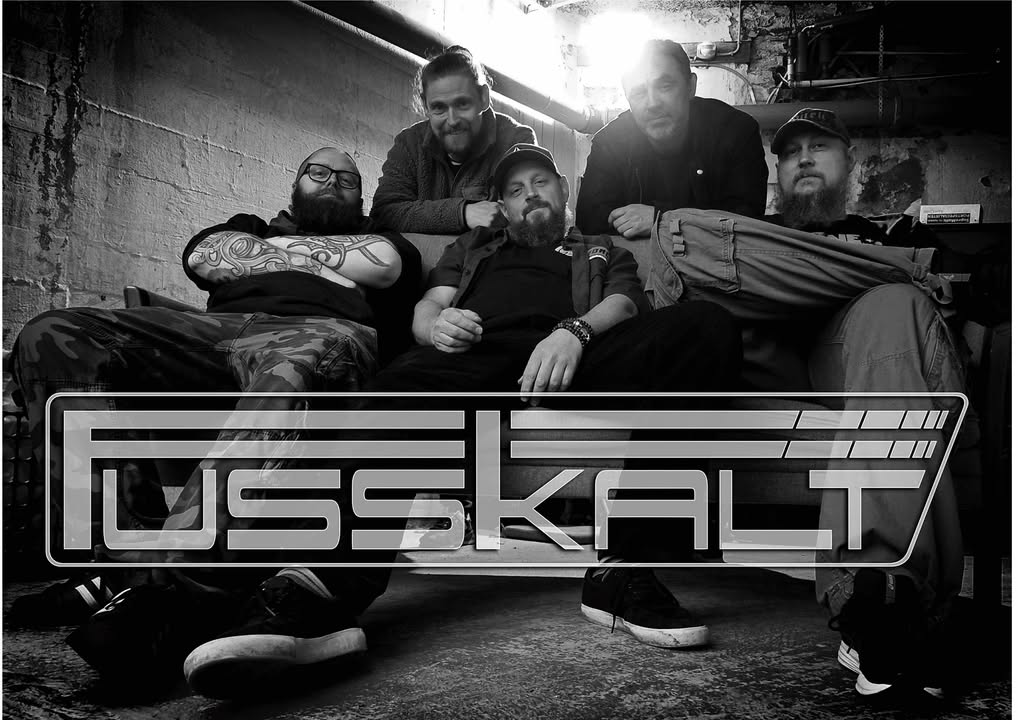
 

Fusskalt – The Heart of Danish Stoner Rock (Interview)

fusskaltfeketefeher.jpg

 Fusskalt might not be a household name for every stoner rock fan — but it should be. Their new EP, Faceless Man, marks a clear step forward: musically more mature, yet still raw and honest.

 This interview offers a closer look at who they are, where they come from, and how they stay true to themselves in an ever-shifting underground scene.

 Their answers reveal more than just musicians — they’re teachers, graphic artists, gardeners. But above all, they do it with passion. They move slowly, but always forward.

Origins and evolution

How did Fusskalt get started? What inspired you to form the band?
-Many years ago, I (Nick – guitars) got together with and old drummer friend of mine, Mike – whom I played with way back in the day, when I first started getting into music and band relations. None of us had been playing in a band for some years at the time we got together again, and we thought it’d be fun. We just started writing and playing some tunes out of his apartment, and it was not really stoner rock or anything of the sorts. We both came from death metal and thrash etc. so it was more in that direction at that time. So the initial inspiration was just the absence of music (from a band perspective) in our lives – and the desire to play again.

Your name comes from Danish slang – is there a story or joke behind it?
-Technically correct, though it’s the German equivalent of the Danish word “fodkoldt”, which doesn’t really have a direct English translation, but we usually say that it’s a term describing when it’s not cold enough in your house, that you put on a sweatshirt, but still cold enough that you put on your slippers. I guess the English word would be footcold?
Anyways – it was actually just a fun working title, but it quickly grew on us and not long after, I created the original logo – and then it was kinda final. Rolls nicely of the tongue though, right?

Your sound has evolved a lot since the early EPs. Was this a conscious shift or a natural progression?
-Like mentioned above, it didn’t start out as a stoner rock project. But in the early days of Fusskalt – when we had actually formed the band and had a full crew (Mike had left us at this time, and was replaced by a guy called Simon), I started getting into the Stoner rock genre, and almost instantly fell in love with it – like it was the missing piece of the puzzle.
At one point we were in the writing process of the track “Dead man walking” and at some point when it was pretty much complete, and we did a full playthrough, we all stopped and looked at each other going “Fuck yeah – this is right – this is where we’re going”, and from then everything started revolving more and more around the stoner genre.
Over the years and the various releases, we delved deeper into everything this genre had to offer, and we got bolder, and more adventurous. I remember when we wrote “Chasing Unicorns” we thought it was really cool playing it, but we had doubts if it would actually make for a good track on an album. However, when we heard it for the first time after recording it, and it having passed through the capable hands of our producer (Henrik Hjortnæs) back then, our doubts we’re laid to rest instantly. It turned out to be one of the best tracks on the Overdrive EP, and it made us feel confident, that we could also pull something like that of.
But yeah – I think it’s a natural progression – us being 5 guys from different musical backgrounds, and with a constant flow of inspiration. We try to bring something new to the table every time, but still stick to our guns to some degree. Not trying to reinvent the wheel, just having a great time.

Releases and sound

The Overdrive and Songs for Speedin’ and Crashin’ era had a raw, energetic vibe. What do you remember most from that time?
-It was definitely a defining time. Our first material, first recordings and following the release of the Overdrive EP, also our first live shows. Everything was luckily very well received, which made us push even harder and try to broaden our horizons.
I believe one of the reasons the tracks feel more raw and energetic, would be due to our musical backgrounds (ranging from hardcore, death metal and thrash mainly) and our insecurity venturing into this new genre. We kinda did what we knew from old times and previous band relations, while at the same time trying to harness that power in a new (to us) genre, that called for… a little bit of restraint.

Intercooler sounded more polished and restrained. How do you reflect on that period?
-The intercooler tracks saw everyone in the band coming much more together in the writing process in a joint effort, rather than just me or Thomas writing a draft, and then all of us doing the final tweaks together at band practice. We did a lot more writing together at band practice, and it felt really good. I remember when we were writing “Falling Down”, which was an everlasting process - we could never get the start just right. Something always felt a bit… off. At some point we had just played it, and Lars (former lead singer) wanted to try out something, but he wanted to just have a single cue guitar, and Thomas started playing the acoustic intro as it ended up being, and Lars fell in with the most fragile and soft vocals – and all of us just dropped our jaws and thought “wow… there it is! That’s how it’s actually going to start”. And this was just Lars testing some phrasing or vocal melody, but it turned out to be exactly the start this song needed.
The recording process was not as smooth as previous releases. It was quite fractured, as we had a hard time getting the schedules to line up for everyone, especially our producer. So it took a long time finishing. For the first time ever, we also had to have the mix and mastering done elsewhere, and we had 3 guys do test mixes, before we settled on one. This was new to us, but also quite eye-opening, as we got some very different results from all 3 guys. I think it was also an eye-opener with regards to our sound and maybe trying to pull in another direction. I always wanted us to be more gritty and dirty sounding, and some of these guys did just that. But in the end, I think it was too overwhelming at the time, so we stuck with the one who made us sound more familiar. Bit more like we were used to with Henrik, who had a more punchy rock/metal approach.
But the other mixes still stuck with me, and I think they subconsciously affected our choices for Faceless Man.

 The Faceless Man EP received great feedback. How did it feel to return with new material? Can you tell us about the writing and recording process?
-I can’t begin to describe how fucking great it feels. And also a bit nerve-wrecking. We had a long hiatus during covid, the departure of Lars and finding his replacement, so for everything to finally come together is a cathartic relief. And for the new material, and Niko to be so well-received, just makes it worth every minute spend rehearsing, recording, producing and yeah… It’s just… amazing.
Most of the material on Faceless Man is actually from back when Lars was still with us. Except River of Gold, which was the first track we did together with Niko. This track was actually created entirely around a single bass-line that Janus came up with at band practice, but it quickly gained a life of it’s own – and Niko was even quicker getting into some vocal bits, and we tried to work around this new “instrument/tool” that was suddenly in our midst (not calling Niko a tool…. Or am I?)
This process was very rewarding, and we got to try out so many different approaches, and when we finally settled, I did what I always do, and created a “dummy” in Pro Tools, and then we recorded some test vocals. This was later used for Jonas to record his final drums, and then everyone else along with it. This is usually the process for when we’re recording – dummy/cue created in Pro Tools, then drums are laid down, then guitars, bass and finally vocals. Pretty standard, I think.
But – this time, we did all the recording ourselves. Having learned so much from Henrik over the years he was acting as our producer (which was all releases up until, and including Intercooler), we decided to go at it on our own. Partly to be in complete control, but also to make sure it would fit into everyone’s schedules accordingly. So Jonas recorded himself, Thomas recorded himself and Janus, and I recorded myself and Niko – and put everything together and did some test mixing and preparations for final mix “out of the house”.
Janus came across a post from Kent Stump (Wo Fat) who was offering his mixing services out of Crystal Clear Sound studios, and it soon became apparent, that he was our guy – and soon after, the raw tracks were sent to Texas. Kent was such a pleasure to work with, and having someone who has almost LIVED the genre give his take on our sound, proved to be the right decision. Kent made us sound just right, and very true to how we think we actually sound. So a match made in heaven for sure.

Has your lineup changed over the years? How did these changes affect your music and workflow?
-It has – but not drastically though. Our first drummer, Mike, actually left soon after we hit rehearsals at an actual physical band practice. He is still credited for drums on the track “Let’s get away”. Simon, our second drummer, played with us up until we had released the first “Songs for speedin’ and crashin’”, and then Jonas took over. From then, the lineup stood firm for many years, and through the release of both Overdrive and Intercooler – until covid hit, and Lars eventually left.
I don’t think anything really changed with the drummer replacements, but it sure did with the arrival of Niko. His energy and lyrical approach actually makes us work a bit more around the vocals than previously, rather than trying to fit the vocals into the music. But apart from that, we do what we do from a process that hasn’t changed that much over the years. If it’s not broken, don’t fix it.

 Lyrics and atmosphere

Songs like River of Gold and Sirens feel emotionally deeper. Was this a conscious lyrical direction?
-Not quite sure of Niko’s motivation behind River of Gold – maybe he can elaborate?
Niko: Thanks for the question. And yes. It came from a part of my own frustration and pain. But the song is basically about the struggle of someone really close to me, trying to overcome cancer, and everything that comes with it.
-Sirens was written by Lars and, as I recall it, inspired by the tv-series “Mr. Mercedes”.
Now I don’t believe Lars is a latent killer, or that he struggles with demons quite in the same way as “Mr. Mercedes”, but I think he found inspiration in the desperation of the person who drove the car full speed into the human line at the job-center. What took him there? Loneliness? Lack of grasp and control of his own destiny? Something like that perhaps.

How do you write your lyrics? Is it a collaborative effort or mainly one person’s job?
-It’s usually a one-person job, but not always the lead singer’s. I wrote the lyrics for Faceless Man, but I usually stay out of the lyric business and leave it to the lead singer. I will however work with the lyrics together with the lead singer, when we’re doing vocal test recordings. There may be words or sentences that either rhyme better, sound better or make more sense in the context of the rest of the song, and in this process, we try to squeeze the best out of it.


Scene and connections

How do you see the Danish stoner/desert rock scene? Are there local bands you follow or collaborate with?
-We generally try to reach out and “assemble the troops”. We’d like to see more stoner/sludge/doom themed shows around. Before covid, we actually organized a bunch of stoner themed shows, under the banner “Stonerado”. Hard work, but great fun. Met a lot of amazing bands, gained many friends, and generally gave us the feeling that there IS a scene. Some of the bands we played with back then are no more, but others have since emerged, so it’s a scene in constant growth and development, and we’ll probably pick up Stonerado again at some point.
I think we will have to do something with Dread Witch, Olm, Zeup, Supercollider, Patron in the near future, just to name a few.

What kind of connections do you have with the international stoner community?
-That’s probably one for Janus (Bass), since he’s mainly doing all the booking/SoMe etc.
Janus, wanna chip in here?
Janus: We are present in so many of the different Stoner Rock groups, talk to loads of people, but what really defines this way of contact is ‘community’. All sorts of different people with one thing i common, the music. From that friendships grows across borders, and you get to see what moves in the local scenes around the world. This also helps with inspiration for our own music, and can make for gigging together if the stars line up just right.


The road ahead

Are you planning new releases or tours after Faceless Man?
-We’re actually thinking of recording again sometime in the near future. Just a 3-track thing, like Songs for speedin’ and crashin’. We have two tracks almost ready and need to write a third.
We want to do this, mostly because we want to make more material with Niko, to make him feel more at home, and also to see where he takes us – like we did with River of Gold. So yeah – maybe something new in less than 7 years?
 We’re planning some concerts and will try to get out as much as everyday life allows it, but generally speaking it looks like actual touring is becoming less and less viable even to established bands and the chance of just breaking even on a small tour seems less likely now, with more and more venues picking the pockets of the bands and their merch sales. I don’t think that’s a hassle we actually want to deal with. Takes the fun out of playing. I think we’ll do what we usually do – assess if a given job is worth it for us either financially or if it’s something we really want to do because of the other bands or the venue or whatever. It’s a difficult discussion. While we want to play, we don’t want to pay to play. That’s not how live music should work.

fusskaltszines.jpg

What does Fusskalt mean to you nowadays – a hobby, a lifestyle, or both?
-It’s definitely a bit of both. While we all love playing in Fusskalt, and want to dedicate as much time as possible to it, it does not pay the bills. So everything is a balance between work, families and of course actually getting some Fusskalt shit done. We’re by no means fast movers – but we DO move… usually forwards too.

Fun question

What’s something your fans definitely don’t know about you, but you think deserves a little spotlight? 😄
-Just like Superman is just a nervous reporter when he is not Superman – when we’re not rock stars, we’re just two school teachers, two 3D graphics designers, and one glorified gardener. How’s about that :D


Ridge Returns: Between Dust, Echoes and Fuzz (Interview Vol.1.)

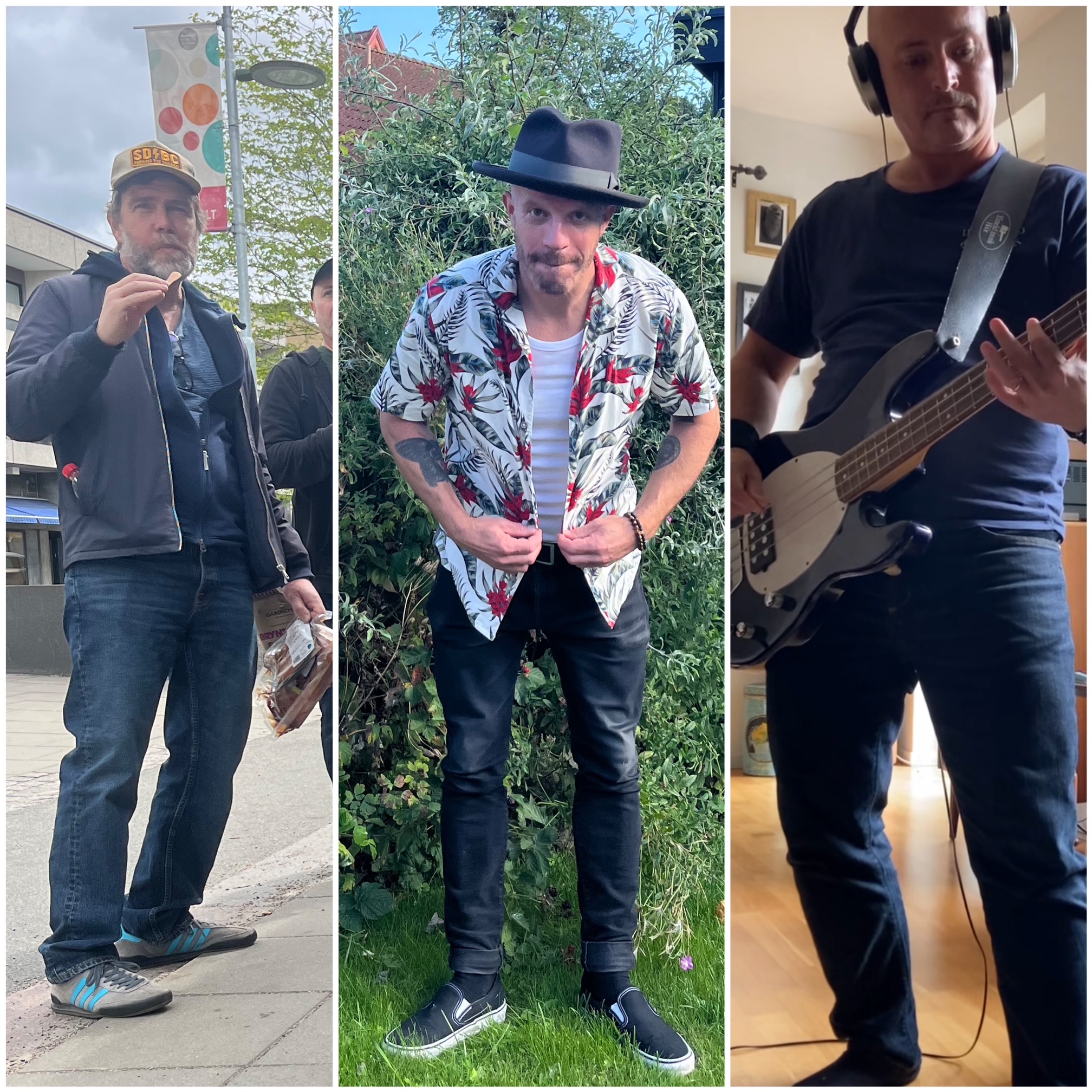
promo.JPG

 When Ridge emerged on the Swedish stoner rock horizon in the early 2000s, the scene was buzzing with powerful releases that shaped the genre’s sound. Fu Manchu had just dropped Eatin’ Dust, a raw riff-heavy slab from California’s desert; Sleep’s Dopesmoker was building its monolithic cult status; Electric Wizard’s Dopethrone dragged listeners through doom-soaked psychedelia; and Queens of the Stone Age were twisting stoner aesthetics into the mainstream with Rated R.

 On the European front, Sweden itself was making waves with Lowrider’s Ode to Io (2000), a seminal album blending doom and stoner grooves with an atmospheric, heavy vibe. It was into this fertile and fuzzy landscape that Ridge stepped—not just as followers, but as distinct voices from the Swedish underground. Their debut, A Countrydelic and Fuzzed Experience in a Colombian Supremo, was no ordinary fuzz-rock record. It was surreal, rustic, deeply melodic—infused with a strange warmth and a sense of space that felt both northern and desert-worn. Now, after more than two decades, Ridge return with two new albums, ready to remind us just how personal and unhinged stoner rock can be. We had the pleasure of talking with Andreas and Jonas from the band to dig into their story—past, present, and beautifully distorted.

Do you remember the first time you ever heard so-calledstoner rock music? What was the song, album, or band that really hooked you? 

Andreas: Well, that’s really interesting because I was a really late bloomer. Me and my punkrock-bandmates were at a festival in the south of Sweden and then suddenly a band got up on stage and started. We heard someone in the band scream: “fuck tuning- let’s go!” And then (I think) Regal Begal begun. It was Fu Man-fuckin-chu! 

What i didn’t know at the time was that the pioneers of stonerrock from Sweden were at the festivalgig: members from Dozer, Demon Cleaner and the record company Molten Universe. Where Ridge further on landed on…

So. From that day on the band- that later became Ridge, progressed from punkrock to Fuzzrock. Or whatever to call it. Then what happened was that we lost both the singer and the bassplayer…Haha! 

Jonas: For me it was Kyuss: “...and the circus leaves town.” Until then I kind of thought that I was the only one to still loved old Black Sabbath...But I wasn’t, because Andreas was a fan too. So. Match made in heaven!

When did you decide to start a band – and what was the main motivation that sparked it?
Do you remember the vibe of those early rehearsals? 

Andreas: I worked at a high school with a “criminal-prodigy” and had just started playing guitar when I heard some pupils playing in the music hall. So I asked them if we could jam. Completely idiosyncratic. They were in the ninth grade and I was like 21-22 but we hit it off and then began to rehearse. A lot of shit were written and when mentioned above happened: Fu Manchu came into the ballpark, it began to switch. 

But when the singer and bassplayer left the band me and drummer Johan Lien had to change sights. And came in contact with Jonas Jönsson. Who loved Black Sabbath and Kyuss. That I didn’t know of at the time. Actually not quite any other so called stoner actually. 

But we rehearsed as maniacs and I thought we had something nobody else had at the time. Well, we started in a small town in the south of Sweden, so it was actually quite true. But. We have always loved communicating and made contact with other bands later on like Dozer, Astroqueen among others because we didn’t know other bands that played that stuff. And we loved the music that no one loved. But we didn’t think at all- we just did what we thought were the best music to play. Unwisely. 

Jonas: I was 6 years old and heard Kiss for the first time. That´s when I decided to play in a band just like them. But it took until my early teens until it happened. The vibe was awesome! And I still just love to hang out in the rehearsalroom!

Ridge was one of the pioneers of the early European stonerscene.
How do you look back on those early years? What was it like playing this kind of music in Sweden and Europe back then? 

First: thank you so much for putting Ridge up on that bill of heroeprotégés. That’s an honor. For sure. We had so much fun recording in Borlänge and playing with Dozer, Demoncleaner, Astroqueen etc. But there will always be one person that we keep close in our hearts. And that is Martin Stangefelt who steered the wheels in Molten Universe. He took us under his wings from the beginning and we’ll forever love what he did for us. 

In the -90:s there were music all around so we tried to get in wherever we could. And got a lot of gigs. But the scene was quite dead in the south of Sweden so we played with Dozer in the north and with Demoncleaner in Stockholm among others. We had a US-tour in the loop when we unfortunately had to call it quits. So we actually feel that the shit didn’t really got to fly accurately. We had so much to deliver and so much more to give the world. That’s why we’re fuckin’ back! (Haha)

 Now in 2025, you're releasing two new albums via DaredevilRecords.
What can you tell us about them? Is there a concept or a common vibe that connects the two? 

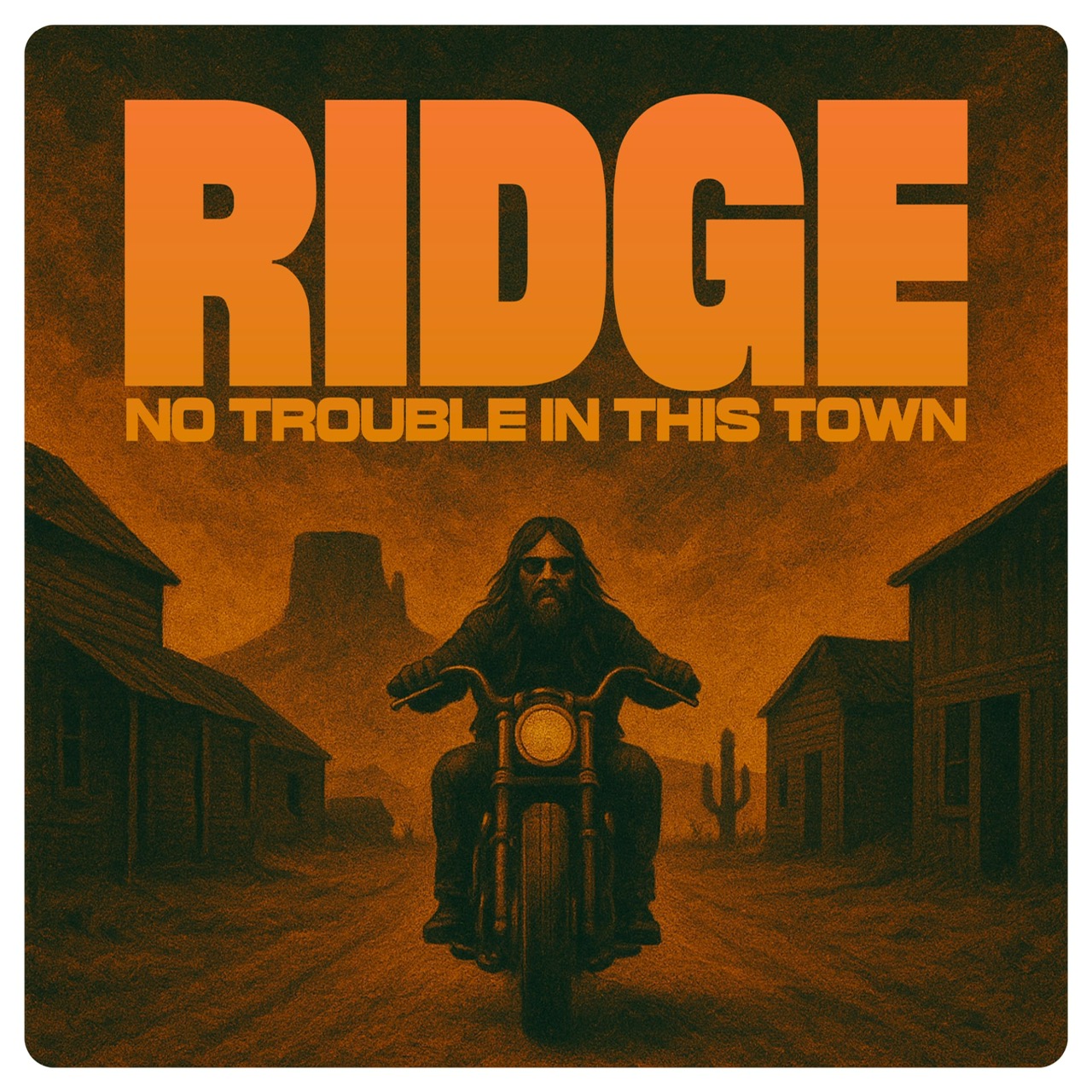
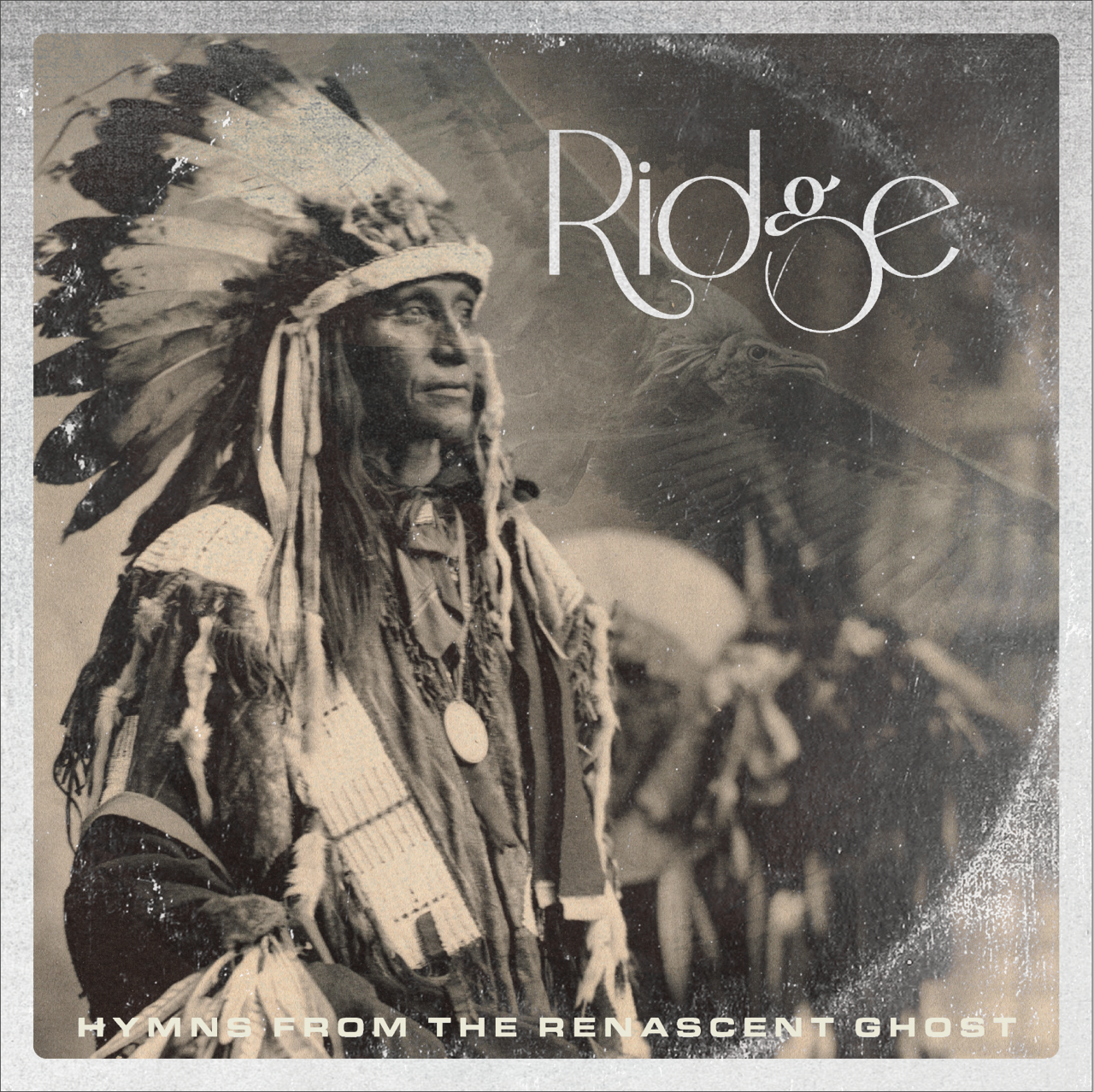
Yeah, that’s insane. On Midsummer’s Eve - June 20th we release “No Troubles in this Town”, “Hymns from the Renascent Ghost” and our debut album (yet again) on all streaming services. The albums have been ready for release about two-three years now so it feels reeeally great to sway them into the world! 

We had one of them on a vinyl-pressing plant when shit-hit-the-fan so it got canceled. And then we decided to dig deep in our fuzz-pockets and switch shit around and release both albums at the same time. 

“No Trouble in This Town” is the album we think is the best album ever written. Well, stoner-wise that is. Maybe. Or like this: it’s the album we ourselves wants to listen to! And if someone thinks “Hymns From The Renascent Ghost” is better we are more then happylicious. But we think it’s up for listeners to decide because we’re too fucked up in the progress of greatness…(haha!)

no_touble.JPG

How has your songwriting process evolved over the years?
Is it more intuitive or more conscious when a new track is born? 

Well, one might think that the songs that were written in the beginning of 2000 is quite different from the ones now. 25 years later. But No. We think the feeling of Ridge is the same. 

If the groove- the attitude- the touch- the approach and the feel is wrong- then it’s not Ridge.

Jonas: It was a very special feeling to play this kind of music together again. When we started the rehearsals there was this kind of old thing kickin´ in, a certain groove that´s hard to explain. But I´m sure the fans will hear what I mean!

Andreas: From around 2021 and forward I wrote an insanely amount of ideas and demos- for like six-seven albums. This during a period of two-theee years but we solved it good. It often came back like this: Fuck no! That’s not good! That’s the [better] way! Etc. And in this frenzy Jonas started to write and send songs as well. So it all went down the good road. But we had to take the high road in the end…

So. We recorded a mountain of songs that in this progress is worth 20 songs…

 hymns.PNG

We've also been listening to Kattskrället – it's a totallydifferent world, but really exciting. Could you tell us a bit about that project? How do you balancethese two musical identities? 

Andreas: Well, it all started on a “wet and wine’y” evening with an old friend in 2022. He said I should write some punk-and-rock-n-roll-songs and sing in swedish. “Fuck no!” was my answer. 

But. I drank some wine (and a lot of rum) and wrote some tunes. Two years later Kattskrället had released 32 songs on Spotify, YouTube etc and made music to a big podcast in Sweden.  I love to switch between genres but it’s all rock, just different highs-and-lows on the pedals. I actually use the same pedals as in Ridge so it’s not that different.

It’s a really really inspirational band and live (and on forthcoming recordings) Kattskrället is Jonas from Ridge on drums- yeah he’s actually a drummer, and a bassplayer Johan Anderberg from cool bands like Deranged, Are We Ape? amongst others. We are going to record an EP during the summer and play live so it’s an ongoing band. If you like rockmusic of any kind this is a blast!

Today’s stoner scene is truly global – with bands popping upfrom South America, Eastern Europe, Asia, and beyond.
Are there any newer bands you follow? Who inspires you thesedays? 

We have discussed this over the years and it’s really interesting how it all has changed. Neither of us are like: ”everything was better before” but something that we’ve talked about is the - Groove -. Nowadays there is more of a progressive side to the scene and we are so into the almighty RIFFS and GROOVE! The movement and love for this kind of rock- have always been, the greatest thing in this genre. It’s a cruel and brutal world in many ways but the love for music- especially in our community, is like the blanket on a cold Sunday morning. All love.

Andreas: When it comes to inspiration for the new songs and records I gotta say I wanted to get the “Feeling”. The feeling of flow and groove. It’s quite easy to write intricate songs with many and strange riffs. But what’s really difficult is to make songs that swings, grooves and have hooks. So. That was my biggest inspiration all along. I can say that all the songs that were rejected from the band were the songs that were too progressive and lacked groove. 

So. That’s Ridge. 

We’re a none progressive, old fucking twat that loves ol’ school fuzz-n-roll! Haha!

Regarding new stuff there a two bands- actually with the same drummer, that I (Andreas) really dig: Skallbank and Troubled Sleep. Both from Sweden and in quite different genres but delivers great energy. Ridge were bandmates on Ozium Records with Hästspark that is an unity that delivers in the vain of Kyuss and Alabama Thunderpussy. Heavy and groovy stoner.

If you had to describe Ridge's music as a single image – a landscape, a feeling, a scene – what would it be? 

 Jonas described it something like this:

Ridge´s music is like... when you’re riding your motorcycle on a straight forward road. And there's a car (new shit) trying to race you. You know he don´t stand a chance, so you kick in the right gear, smile and give full gas. That thrill. Right there and then you are invincible.

Andreas: I can agree on a lot of that but my vision is like a laundromat. You swirl around in blind but suddenly it stops and you slow down…And then it hits you again- with full swirling speed. And when it’s done you feel clean, wet and totally exhausted and exquisite. Haha! 

Thank you so much for having us rambling on! It’s been an honor.

They're back – dirtier, louder, and they couldn't care less about what's trending. Stay tuned — part two of the Ridge story is coming soon, diving into their brand-new albums and the fuzzed-out fire that still burns strong. Ridge was, is, and will be! AMEN!

Retrospective: Mario Lalli - The Desert Root from Which Everything Grew

Mario Lalli is not just an iconic figure—he's a living sculpture in the pantheon of desert rock. Every grain of sand knows his name, even if it doesn’t realize it.

For over forty years, he’s been part of the desert sound culture. Silent disciples and loud devotees: Josh Homme, Brant Bjork, Dave Catching—all grew up in Lalli’s “shadow.” He never sought the spotlight—he preferred to shape the scene rather than cultivate his own cult.

The Beginnings: Across the River and the Primal Core

In the late 1980s, when most people were still immersed in punk or glittering glam metal, something else was budding deep in the Coachella Valley—a kind of desert spiritualism that Lalli and his companions shaped from sound.

Across the River—the project of Mario Lalli and Alfredo Hernández (later of Kyuss and QOTSA)—is often seen as a proto-desert rock band before Kyuss. But it's more than that: it was the first stone that started the avalanche, or better yet, the amniotic fluid of the entire movement. Not the birth of a genre, but of a way of perceiving the world.

Their music wasn’t made for clubs—it evolved under the open sky. Guitar and drums jamming in the dust—not romantic posing, but a way of life. They were children of a time and place where nothingness was the muse, and silence begged to be filled with meaning. 

Yawning Man: Soundscaping the Sublime

Alongside Gary Arce and Alfredo Hernández, Lalli also co-founded Yawning Man, arguably the most atmospheric and spiritual band of the desert scene. While Kyuss would go on to gain legendary status, many musicians—Josh Homme included—cite Yawning Man as the true essence of the genre.

Yawning Man didn’t aim to dominate; they aimed to dissolve. Their expansive, reverb-heavy instrumentals were like mirages: elusive, shimmering, and hypnotic. They planted the seeds of meditative fuzz, where structure gives way to space.

Fatso Jetson: The Psychedelic Punk-Blues Laboratory

In 1994, Lalli founded Fatso Jetson, where he pushed desert rock into weirder, more avant-garde directions. His son, Dino von Lalli, and Tony Tornay played key roles in the band. This time, the desert wasn’t an external space—it was internal. Their albums are dark, unpredictable, but always carry the soul-driven jamming energy that defines Lalli.

Fatso Jetson is a true underground gem that connects geographies, styles, and eras. One day it’s instrumental punk-blues, the next it’s desert krautrock.

The Generator Parties – Myth-Making in the Dust

Mario didn’t just play music—he created space for music. The legendary Generator Parties didn’t happen in venues, but out in the desert, powered by generators, among rocks at sunset. These gatherings became fertile ground for the entire desert rock scene.

In Lalli’s philosophy, music isn’t a product—it’s an event, a one-time moment in the universe that deserves to be lived. The Generator Parties became myth, and through them, Lalli became indispensable.

Mario Today: Rubber Snake Charmers and Brant Bjork Trio

Mario Lalli remains active. Mario Lalli and the Rubber Snake Charmers is a soul-driven, improvisational project where he creates freely. It’s a jam session band built as much on meditative energy as on fuzz.

In 2024, he played aboard the A38 ship in Budapest as part of the Brant Bjork Trio, once again proving that his playing isn’t tied to time or trend, but to something deeper: pure musical presence.

Mario Lalli was never just a frontman—he was the frontline. A man who pointed the way, filling empty spaces with sound, people, and meaning. If desert rock were a religion, he would be its hermit prophet—writing its gospel in stone and silence. AMEN

 https://www.facebook.com/HEAVYPSYCHSOUNDS

Koncert ajánló: Ten Ton Slug – Sludge metal Írországból

Június 5-én olyan estére készülhetünk, ahol a riffek súlya alatt nemcsak a dobhártyád, de az önérzeted is reccsenhet egyet. ( https://www.facebook.com/events/1318102309277395/) A Ten Ton Slug végre Budapestre érkezik, hogy letarolja az S8 Underground Club színpadát, és hozza magával az ír mocsarakból felbugyogó sludge/death metal őserőt.

A Galwayből származó zenekar olyan, mintha Crowbar egy viharos tőzeglápban találkozna a Sepultura-t megidéző dühvel. A legutóbbi, 2024-es "Colossal Oppressor" lemezük betonfalnyi súllyal nyom rád: lassú, hömpölygő pusztítás, ami nem kérdezi meg, készen állsz-e – csak elindul rajtad.

De nem egyedül jönnek. Ez a turné nemcsak egy koncert, hanem négy fronton támadó riff-kereszteshadjárat.

Diggeth (NL) – Fogj öt évtizednyi hard rockot, metalt, southern ízt és egy csipetnyi prog-ot,  a Diggeth ezt megrágja, lenyeli, majd egy groove-nehéz, horzsoló hangzással köpi vissza rád. Ez a holland trió új jelentést ad a "metal-’n-roll" fogalmának: dögös, mocskos, de közben mesterien megírt dalokat játszanak, ahol ugyanúgy benne van Lemmy öröksége, mint a dél poros autópályái. Három ember, de egy szónikus monstrum.

Deres (HU) – A zenekar 2018 szilveszterének éjjelén született, és már az első közös örömzenéléskor világos volt számukra: ez több mint jammelés, ez hazaérkezés. A stoner rock hangulata nemcsak zenei forma, hanem közeg is számukra – mint a Kyuss kábult lüktetése a kaliforniai sivatag porában, csak itt másfajta szél fúj. Zenéjükben a riffek hömpölyögnek, a torzítók nem kérnek engedélyt, és az a súly, amit képviselnek, nem megjátszott – hanem átélt.

Bearfood (HU) – Az 1990-es évek végén alakult kelet-magyarországi zenekar, akik a korai Black Sabbath nyomvonalán indultak, de mára a stoner/southern/sludge/doom metal ötvöződéséből hoznak létre egyfajta sűrű, ragacsos hangmasszát. Négy lemezt adtak ki, és már a korai korszakukban is sikerrel szerepeltek tehetségkutatókon. A színpad az otthonuk, ahol nem manírral, hanem riffekkel győznek. AMEN!

https://www.facebook.com/TenTonSlug, 

https://www.facebook.com/Diggethmusic/

https://www.facebook.com/DeresZenekar/?locale=hu_HU

https://www.facebook.com/bearfoodmusic

süti beállítások módosítása