The riffs strike back – this time without psychedelia, bare-knuckled and loud.
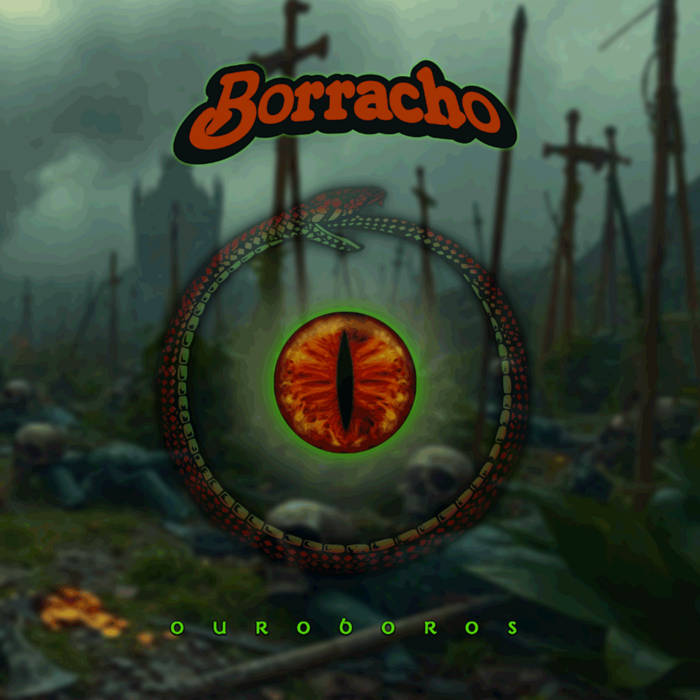
For the longest time, Borracho only existed on the edge of my awareness… or rather, the edge of my ears. I was always aware of their greatness, but either the message didn’t get through, or I simply wasn’t ready to receive it.
Then in 2023, Blurring the Lines of Reality found me at just the right time. I listened to that record for days on end, even though a bunch of other great albums dropped that year too. I wouldn’t say it’s been in constant rotation since then, but whenever I wanted a groove-heavy, psychedelic-driven record, Borracho was my go-to. Plus, the sound was flawless.
So I had every reason to look forward to the next album.
And when the time came… ...and I heard those first riffs, I have to admit — I got a little nervous. But slowly, I came to terms with it: just because something is rougher, heavier, more in-your-face, doesn’t mean it’s not damn good. And that’s exactly what this is.
The band doubled down on heaviness – but they didn’t throw melody out the window. I won’t claim there are choruses you’ll be humming for days, but the melodies that are here strike a perfect balance with the massive, stripped-down riffs. The psychedelia has been pushed to the background this time, but oddly enough, it’s not really missed.
And the production? Once again, it hits the mark: not the kind of clean where you hear a mouse fart in the corner – it’s fuzzy, slightly stinky, and big as hell. Like that one shady guy in the beachside dive bar that even the bouncers don’t want to mess with.
Ouroboros wears its concept proudly: the ancient symbol of the serpent devouring its own tail, representing cyclical destruction, eternal return, and the self-sabotaging patterns of human society.
The album’s lyrical landscape sails into darker waters, woven through with themes of fragile mental health, the many faces of oppression, and the slow decay of society. But don’t expect philosophical musings – what you get instead are dry, sizzling guitars, stomping grooves, and biting lyrics. No endless jams or trippy prog turns – just the core. Hard rock done right: dense, dirty, raw, and real. AMEN!
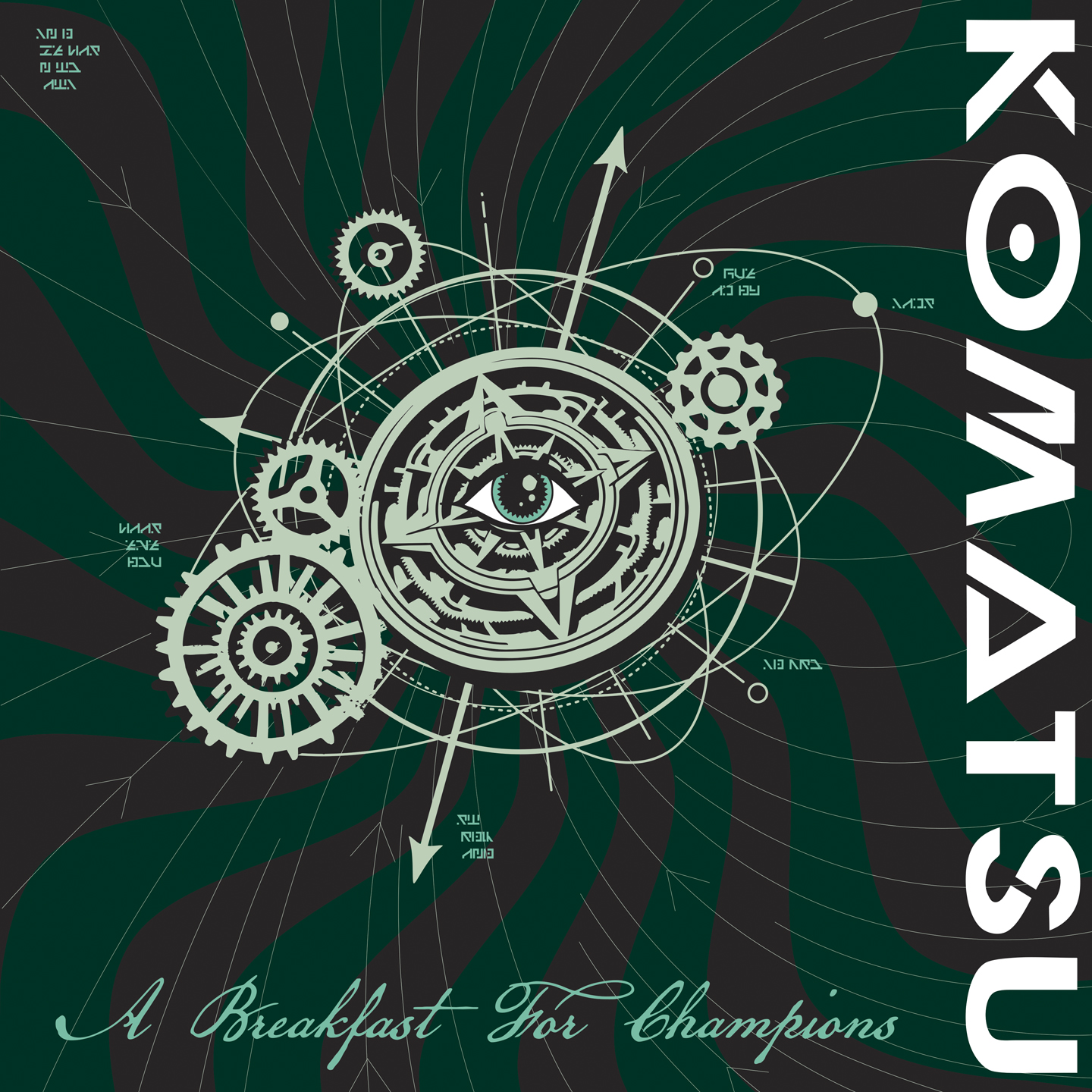
Now on their fifth album, Dutch trio Komatsu have stripped down to a leaner lineup and finally locked into that brutal yet focused sound that’s been pulsing beneath the surface for years. A Breakfast For Champions doesn’t ease you in — it punches you straight in the face and never lets go. This isn’t a continental breakfast, it’s deep-fried chunks of concrete behind a crumbling gas station.
The record is raw with a sludge edge and draped in psychedelic haze, all while pulsing with the core groove of stoner rock. Some riffs hit with a caveman’s touch — in the best possible way — while others slither in distorted spirals toward a kind of apocalyptic catharsis. Imagine Dozer, Melvins, and Helmet locked in a slow-burning jam in a smoke-filled aircraft hangar.
A Breakfast For Champions is, musically and emotionally, Komatsu’s strongest and most honest release to date. It doesn’t try to say too much, but it shouts what it means. It’s angry, gritty, and somehow still deeply human — as if there’s a tired but defiant soul breathing under all that fuzz.
If you're into heaviness, smoke, and noise, this one serves it up by the shovelful. And it’s definitely not for dessert. KomatsuFB, Heavy Psych Sounds FB AMEN!
While the early '90s rock world had its eyes set on Seattle, something entirely different was brewing in the industrial backstreets of New Jersey. Among smoke-stained garages and comic-book-fueled dreams, a man named Dave Wyndorf was preparing to blast off into the unknown.
Monster Magnet didn’t come from the desert, but their music was equally scorched – just not by the sun, but by the neon haze of East Coast anxiety. Wyndorf, a former punk and horror-obsessed nerd, wasn’t chasing trends. He wanted to hear what would happen if you took Hawkwind, Sabbath, and the Stooges, funneled them through a fuzz pedal, and launched them into orbit.
Formed in 1989 in Red Bank, NJ, the early Monster Magnet lineup featured guitarist John McBain and chaos-contributor Tim Cronin. Together, they unleashed a series of recordings (Monster Magnet EP, Tab, etc.) that weren’t songs in the traditional sense – they were experiences. Massive, droning riffs, acid-drenched vocals, and a sense of purpose: to expand your consciousness via maximum volume.
Their first full-length album, Spine of God (1991), didn’t chart – but those who heard it were changed. It was too weird for radio, too heavy for the alt scene, and too smart to be dismissed. A hallucinatory garage-space ritual built on distortion, sci-fi references, and a frontman who preached fuzz like gospel.
Act II – Superjudge and the Psychedelic Ambition
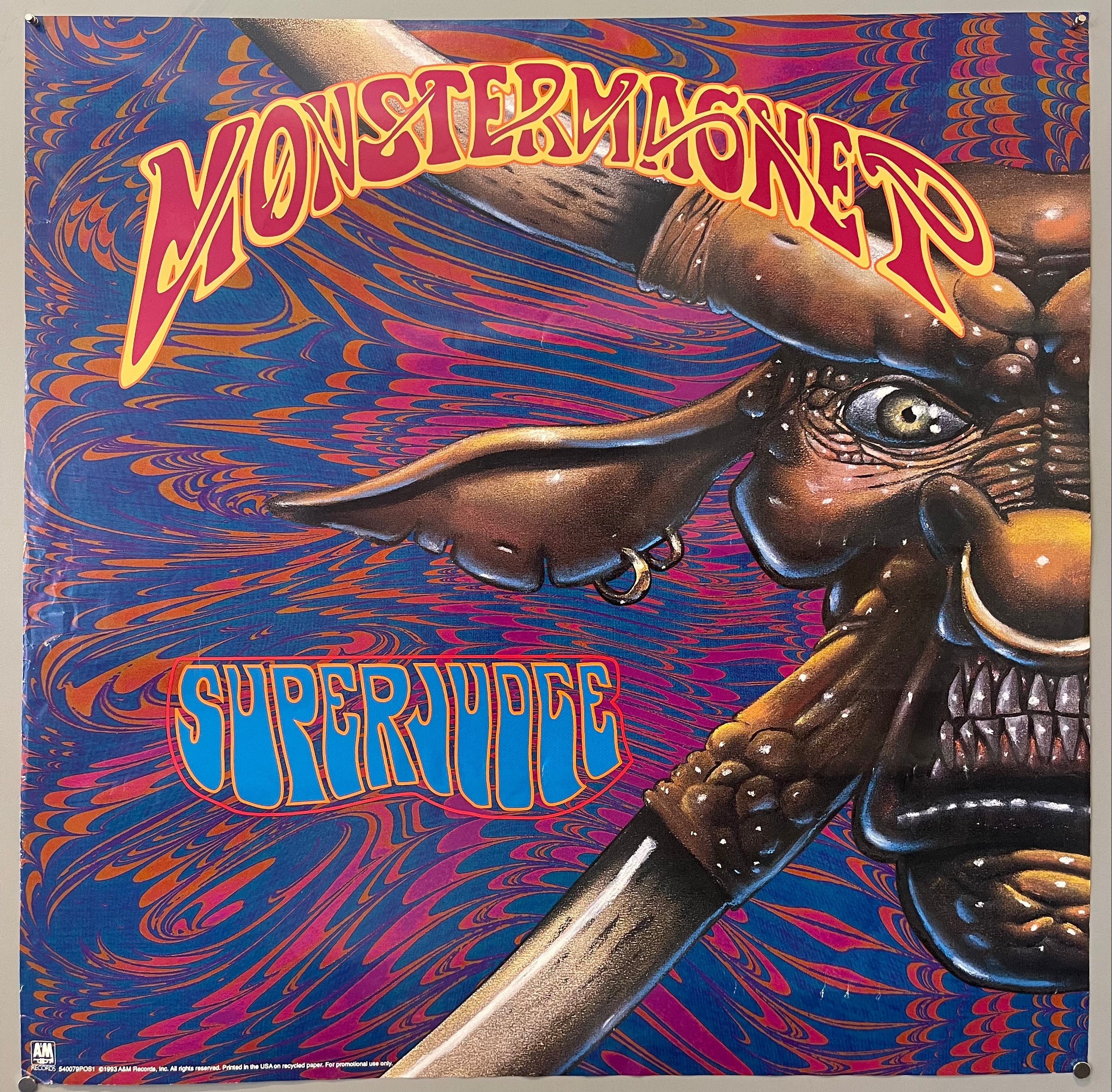
By 1993, Monster Magnet had a clearer vision, and Superjudge was their first real attempt to cross into a wider world. Wyndorf wasn’t hiding anymore – he was declaring war on mediocrity.
Superjudge was still heavy, still fuzzy, but this time it was sculpted. Riffs were riffs, but also mantras. Songs like “Twin Earth” and “Cyclops Revolution” combined doomy weight with infectious structure. Wyndorf wasn’t writing underground anthems anymore – he was crafting cosmic declarations.
It wasn’t a commercial success, but Superjudge marked the arrival of Monster Magnet as more than a fringe act. Wyndorf was evolving into a preacher of psychedelic overdrive, and his band was more than ready to deliver.
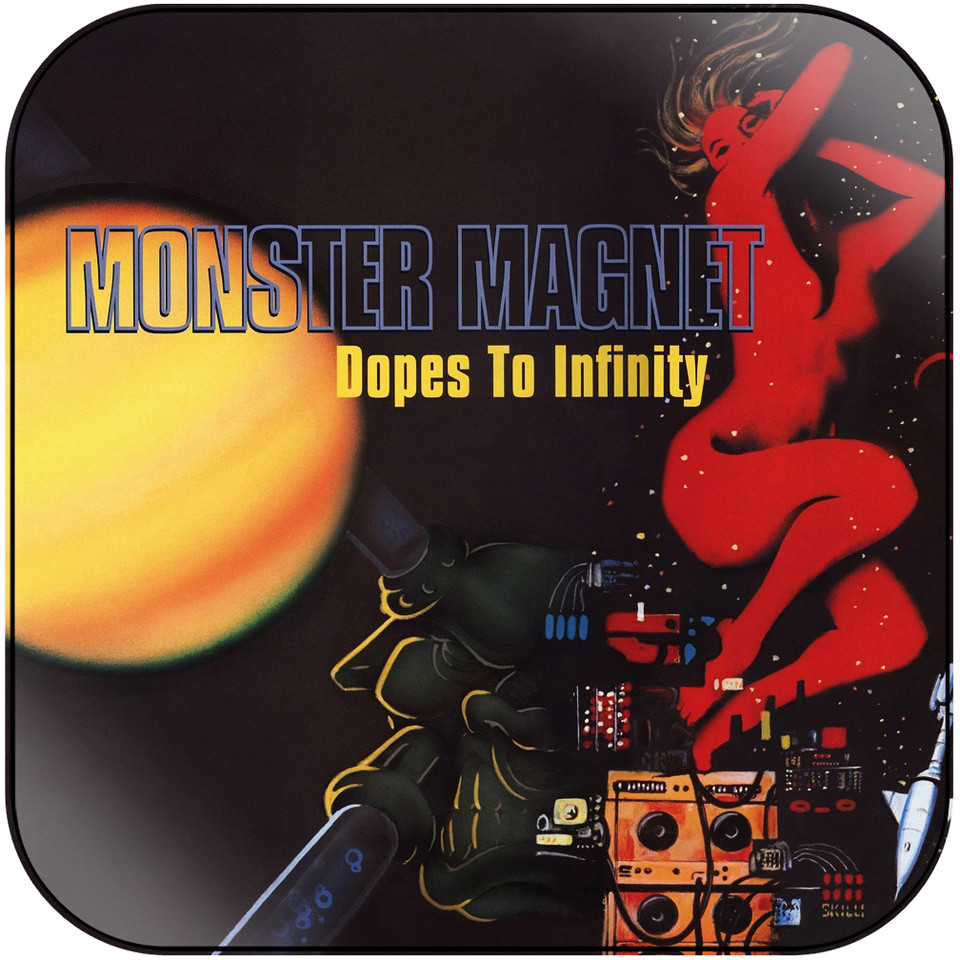
Act III – Dopes to Infinity – When the World Finally Heard the Noise
1995’s Dopes to Infinity changed the game. With the breakout single “Negasonic Teenage Warhead,” Monster Magnet finally made it onto MTV, without sacrificing an ounce of heaviness or trippiness.
This album was focused, deliberate, yet cosmic. Tracks like “Blow ’Em Off” and “Look to Your Orb for the Warning” showed that Wyndorf could channel his comic-book acid visions into digestible – even catchy – structures, without losing any of the weird. The closing track, “All Friends and Kingdom Come,” felt like a funeral dirge for sanity.
This is also where Ed Mundell’s lead guitar work became central to the band’s sonic identity. His solos weren’t just flashy – they were interdimensional. Mundell became the voice of the voyage, while Wyndorf remained the visionary.
Dopes to Infinity wasn’t just an album. It was a gateway. And once you entered, you didn’t come back the same.
There are record labels that don't just release music – they create worlds. Ozium Records was one of those rare labels: a small Swedish imprint that, for over a decade, unearthed and shared the finest in fuzz-drenched stoner, psychedelic and doom rock – often from deep within the underground. Mamont, Lugnoro, Heroinne, Void Commander, Ponamero Sundown, Ridge – just to name a few of the acts that found their way to listeners through the vision and commitment of Mats Florstam.
Now, it seems the story may be coming to a halt – perhaps temporarily, perhaps for good. Mats, the founder of Ozium, speaks with honesty and pride about the path he's walked, the challenges and rewards along the way, and what the label has meant to him. Yet between his words, there’s a flicker of hope: maybe this isn’t the final chapter. Maybe a new label will rise, a new direction will emerge – or maybe Ozium itself will find a way back.
In the following interview, Mats reflects on the beginnings, his relationship with the bands, the struggles of the underground, and the secret behind Scandinavia’s deep-rooted connection to heavy rock.
Could you tell us how and when your musical journey began? What led you specifically towards this direction in rock music – the stoner, psychedelic, and fuzz sounds?
As a kid my dad took me to see Ac/Dc live and I got hooked and my older brothers listened to heavier music and I was sold. My dad had a jazz club that influenced me to start something with music and later on I got a job at Record Heaven and the boss gave me plenty of good advice. I started with a webshop then later decided to do releases with bands I want to help to reach out to and I did release only music that I REALLY liked.
Ozium Records releases not only classic material but also puts strong emphasis on emerging bands. What motivates you in this, and how do you select which bands to work with?
The first release my boss at recordheaven played for me and I liked it, he told me I could start with “lugnoro”, otherwise he would release it. Iwas selling really great and some bands sent me a demo and holly molly the mighty band “mamont” came in and I just had too. Mamonts split up and i worked with guys all other bands because we got an strong personality times, saw each others and talked in phone, other bands i became friends with is almost everyone
How intense and personal is your connection with the bands represented by the label? Do you work with them regularly, or do you support them more from a distance?
Later on i had too many bands to keep up the personal connection unfortunately but still with some talk on my phone but more and more thru messenger :( , so they supported them more and more from a distance.
How do you currently see the genre? Where do you think stoner and psychedelic rock is heading in the next few years?
I hope and think the genre still be existing but att least my regular customers getting older and might supporting labels or bands they really liked, they got so much so it need to be something really special and the younger people can almost not afford vinyls and what i dont understand is “at” my job , the young boys & girls dont know what vinyl/lp or cd dont know what it is.
What’s your opinion on the underground scene? What role does Ozium Records play in that environment?
Well, I have paid for plenty of releases supposed to come but the manufactory shut down and has not replied to me to get the money back thru mail and not answering my phone calls so had to close down with more releases, sadly. It's a bit over 2000 euro gone.
What challenges does an independent label face when focusing on such a niche segment of rock music?
Weel, thru the 13 years as a label, immediately got a strong fanbase and they bought everything i released so the challenging wasn't that hard, but lately the bands had to do some promoting especially getting gigs and some didnt at all or only thru facebook that not reach out to people, nor did tha bands “add” friends to follow them, then the bands cant got expected to sell or getting gigs.
Are there any new bands or projects you find particularly exciting, and that listeners should keep an eye on in the near future?
Many many but the previous question is that I will shut down or start an new label with focus more on other genres, such as prog, rock n roll , or on bands that can be BIG bands like Nirvana :)
How do you see the impact of the digital era and streaming platforms on the music industry – especially on niche genres like the ones Ozium represents?
I am surprised how well the digital/streaming music sells, which I dislike. Are not comfortable to do digital release cause it feels not “the real deal”.
What is the core value and mission of Ozium Records for you?
At the moment as I am fooled of alot of money do i not know how come back again, sadly. And i have started to face the facked that ozium not are gonna do more releases and anyway proud all the 13 years i have done this
How do you see the fact that Scandinavian countries – especially Sweden – seem to convey stoner rock (and many other genres) in such a genuine and original way? In your opinion, what’s the “secret” behind this musical richness and strong cultural presence?
First I think it is already in school that we have to learn instruments, then there is nothing to do in smaller cities and Sweden is a little country …
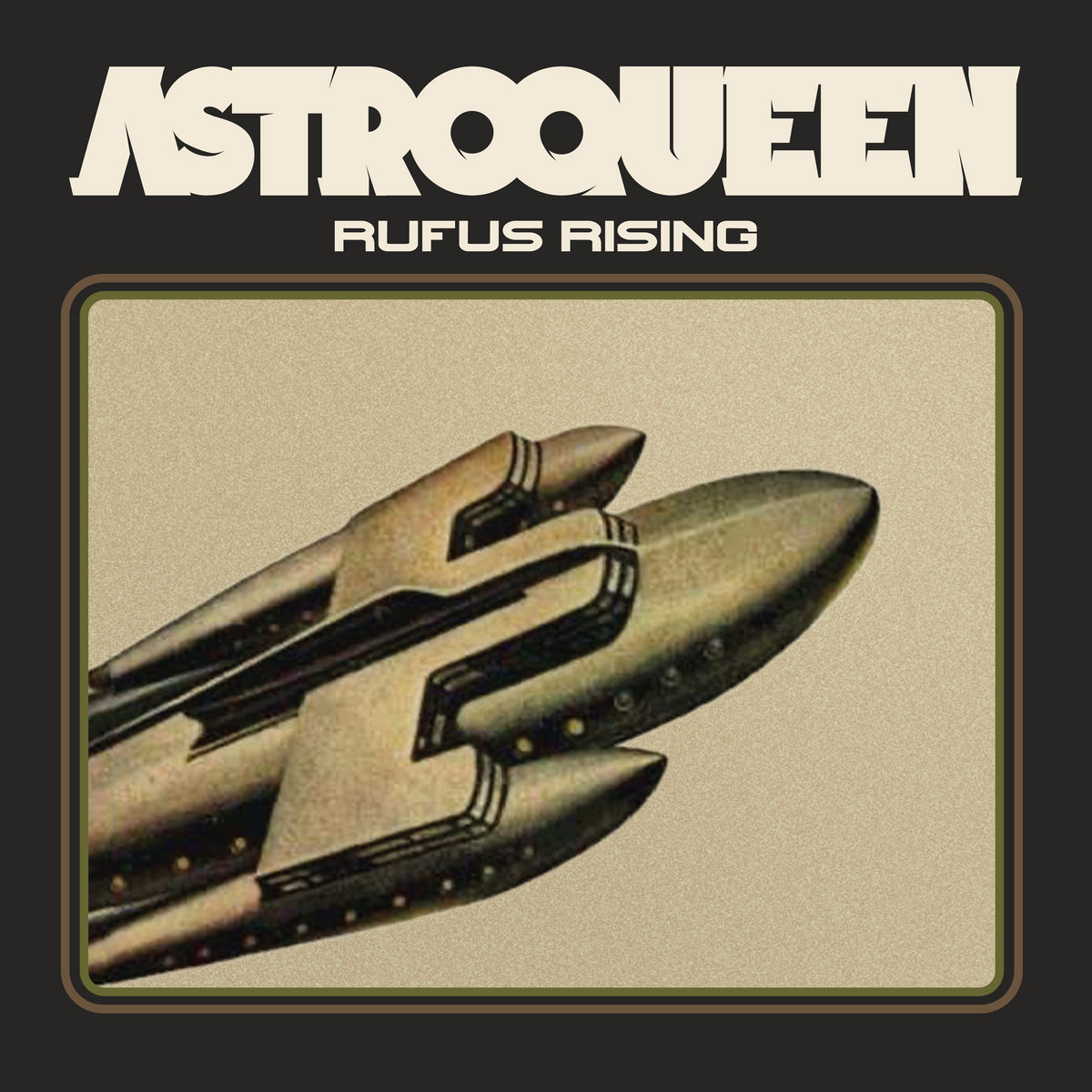
Few bands have left such a lasting mark on the underground scene as Sweden’s Astroqueen did around the turn of the millennium. Their album Into Submission reached near-cult status for many – and then came silence. Twenty years passed before we heard from them again, and now, with the release of the Rufus Rising EP, the long silence has finally been broken.
What motivated their return? How did those old demos resurface, and what’s it like to work with Andy LaRocque again? Johan Borgede answered these questions and more – sharing thoughts on the evolution of the Swedish scene, their relationship with stoner rock, and even what kind of beer Astroqueen would be if it came back as a drink.
Reading through the interview sparked not only answers, but new questions too – so hopefully, this is just the beginning of our renewed conversation.
1. After twenty years, you’re back. What motivated your return? At one point, the break seemed final – yet you reunited. What happened behind the scenes? First of all, I don’t think we ever really split up—it just turned into a very long break. We did consider a fresh start and even met once in the rehearsal space back in 2013, but at that point, we all had too much going on in our lives, so there simply wasn’t enough time. Daniel Änghede was busy with other projects (Crippled Black Phoenix, ISON, and Hearts of Black Science), Mattias quit music due to tinnitus, Daniel Tolergård also had several other projects and started a family, which took up a lot of time. Personally, I distanced myself from music completely for a couple of years and focused on work and family. I think we were just quite worn out after so many years of playing together and needed a break.
2. Two songs on the Rufus Rising EP – “Tidal Wave” and “Turbin Turbine” – originally appeared on your 2003 demos. Looking back: why were these songs left out of official releases back then, and why did you feel now was the right time to bring them back and re-release them? The songs were recorded quite quickly after Into Submission was released, and the idea was to use them to land a new record deal after Pavement Music went bankrupt. One of the songs was released on a compilation, and to be honest, I don’t really know why they never came out as an EP.
3. To what extent did you rework these songs? Did you completely re-record them, or mostly update the original tracks? The guitars are completely new, recorded in our own studio where we rehearse. Then everything was remixed at Sonic Train Studios together with Andy La Rocque. Sonic Train is Andy’s new studio after Los Angered.
4. Andy LaRocque’s name appears again in connection with the EP – he did mixing and mastering at Sonic Train Studios. You’ve worked with him before, but what exactly was his role this time? How actively was he involved, and what did he add to the modern sound? As I mentioned earlier, he mixed and mastered the EP, which is his main contribution. But we also feel very comfortable with Andy and really enjoy working with him. When we met him again after almost 20 years, it felt like only a week had passed. He has incredible knowledge and experience, and I think he contributes a lot to our recorded sound.
5. Sweden became a kind of stoner rock hub in Europe during the early 2000s – many iconic bands (Dozer, Truckfighters, Lowrider, etc.) emerged from this scene. Why do you think such a strong scene developed here? You were part of it too – how do you remember those times? Honestly, I don’t really know, but I think Sweden’s metal scene needed something new at the time. The death metal scene was pretty played out, and nu-metal was on the rise, but not everyone identified with that. I guess there was a need for a slightly dirtier alternative 😊. We kept at it, but it felt like not many people really understood what we were doing, so we didn’t play live very often. In Sweden, the real “stoner wave” probably came after we took a break. We were, of course, aware of bands like Dozer and Lowrider, but we didn’t have much contact with them.
6. Listening to the new EP, it’s clear you stayed true to your original sound, but the songs feel fresher and cleaner. Was this a conscious choice? Was there a sense of nostalgia, or did you see this as the start of a new era? The songs were recorded 20 years ago, so the sound is probably very much how we sounded back then, but I believe all Astroqueen fans will recognize us when the next album comes out. We wrote tons of material back then and saved everything, so putting together songs for the upcoming full-length album was actually pretty easy.
7. Is there a chance we’ll hear new songs from you in the near future? Or is this EP more of a closing chapter for your earlier era?
As of now, we have 12 new songs ready, so we’re definitely going to release a new album. Once again, we’ll be working with Andy and Sonic Train.
8. Are you planning any concerts or tours with the new material? We’re definitely active again and want to play live as much as we can—though probably no world tours. But we’re very eager to make a trip to the U.S. at some point. At the moment, we’re mostly doing one-off shows, including for the new EP, but with a new album, there will definitely be more.
9. How do you see the international stoner/doom/desert rock scene today? Do you follow current bands, and are you inspired by anything from the new generations? We listen to a lot of great bands in the scene, both old and new, and I think the scene is evolving well. It’s great that there are so many new bands. Of course, it can get a bit tiresome when many bands start to sound the same, but that’s not unique to the stoner scene. Unfortunately, I don’t think we draw much inspiration from newer bands or even from the stoner scene itself—it’s probably still our old heroes from the '90s that inspire us the most.
10. What does stoner rock mean to you now, after all these years? Do you associate it with the same feelings as when you started? Stoner rock has probably never meant that much to us, and there’s a lot within the genre we’ve never really identified with. That said, it’s convenient to have a label for the type of music we play when people ask. But overall, it’s a great and vibrant scene with genuinely good people—both fellow musicians and listeners.
11. What message do you have for those fans who still remember Into Submission after more than twenty years and welcomed your return with joy? Please be patient with us 😊
12. If you could send just one riff into space to represent humanity’s stoner rock legacy to an alien civilization – which one would it be and why? 👽🚀 Opening riff on “Dragonaut”!
13. Imagine you could start the band all over again, but in a completely different style – what would it be, and what would the band name be? Probably a thrash metal band if you ask me, but Daniel Ä, Daniel T, and Elinore would probably give completely different answers. Band name: Scum (just like our old thrash band from the early '90s).
14. If Astroqueen were a beer, what flavor would it have? Hoppy? Smoky? Out-of-this-world aromas? Once again, I can only answer for myself, but I would be a strong hazy IPA from a local brewery. It would probably be called Rufus Revenge 😊
15. What’s a classic album (stoner or otherwise) that you think every stoner rock band should listen to again and again? Master of Puppets, if you need a classic.
Szavak és hangok a sivatag merengve lüktető torkából, dűnék felett cikázó akkordok, tétován gomolygó füst, vagy izzó száguldás. "Let the truth be known, Get stoned!"
(Ha zenét töltesz le a blogról, kérünk, hogy 24 órán belül töröld, és ha tetszik, vásárold meg legálisan, mert az úgy jó. Köszönjük.)




Kommentek