The Witching Buzz music platform is set to honor one of stoner rock’s greatest legends, Kyuss, with a brand-new compilation titled Spaceship Landing: A Tribute to Kyuss.
Scheduled for release on October 31, 2025, the album will feature bands from 21 different countries reimagining iconic Kyuss tracks. Known for pioneering the desert rock sound in the early ’90s, Kyuss remains one of the most influential forces in the genre. Spaceship Landing promises to be a worthy homage to their enduring legacy.
Full Tracklist:
Amammoth (Australia) – Son of a Bitch
Mörkekraft (Norway) – Writhe
Sonic Wolves (Italy) – Thumb
Rhino (Italy) – Green Machine
Gurnslinger (Jersey) – Molten Universe
Void Cruiser (Finland) – 50 Million Year Trip (Downside Up)
King Howl (Italy) – Freedom Run
Rainbow Bridge (Italy) – Apothecaries’ Weight
Fuzz Evil (USA) – Supa Scoopa and Mighty Scoop
3 Wheeler Band (Mexico) – 100°
DoctoR DooM (France) – Space Cadet
Poste 942 (France) – Demon Cleaner
ISAAK (Italy) – Odyssey
Folwark (Italy) – Whitewater
Abel Blood (USA) – Caterpillar March
Epic Down (Germany) – Hurricane
Loose Sutures (Italy) – One Inch Man
Wet Cactus (Spain) – Phototropic
Wolfnaut (Norway) – El Rodeo
Mercure (France) – Size Queen
Cover art by Captain Maoos
More information and pre-order details will be available soon at witchingbuzz.ovh.
Stoner rock is often associated with deserts: slow tempos, down-tuned guitars, and psychedelic vibes evoke scorching heat and sandstorms. Bergen, however, on Norway’s west coast, is almost the opposite: cold, gray, and rainy. Yet the city boasts a vibrant rock and metal scene, and stoner rock thrives here too, exemplified by Slomosa, formed in 2017. Their self-titled debut came out in 2020, followed in 2024 by their second album, Tundra Rock.
Tundra Rock features nine tracks rooted in stoner rock, infused with a psychedelic twist. The title may sound unusual, but in Norway, the “desert” can also mean the frozen tundras, where the slow-moving nature inspires the music’s tempo. Influences are clear from genre greats like Kyuss, but also from grunge legends like Soundgarden, especially on tracks like Cabin Fever. One standout is Red Thundra, where bassist Marie Moe takes some vocals, creating a dynamic interplay with Benjamin Berdous.
The album balances heavy riffs with melancholic atmospheres: Monoman and Rice deliver classic stoner rock power, while the piano-driven interlude Good Morning adds a peaceful moment before Battling Guns returns with a heavier, more melodic sound and personal, anti-war lyrics. Tundra Rock is a strong ambassador for stoner rock, capturing the Norwegian melancholic mood of Bergen while delivering energetic, heartfelt music that can easily stand alongside the genre’s big names.
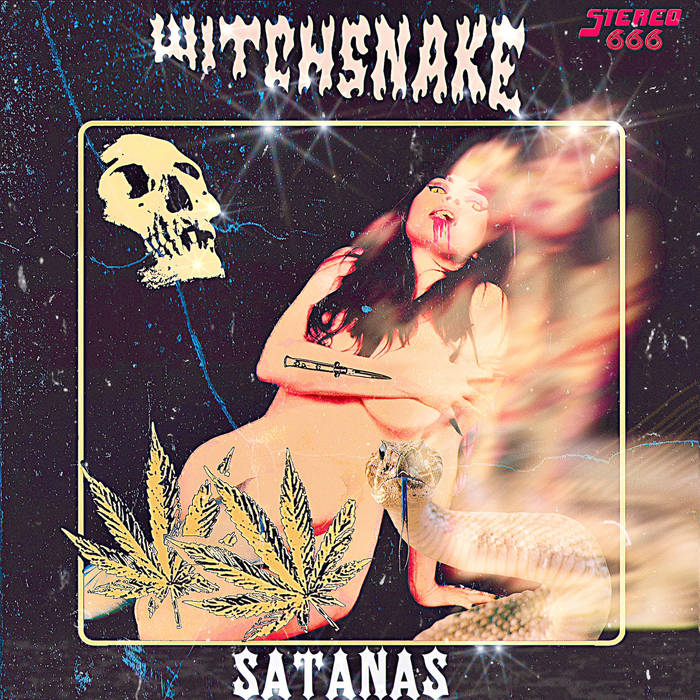
Smoke coils out of the speakers, the air thick as molten tar. Satanas doesn’t ask if you’re ready—it simply engulfs you. Witchsnake’s new album is a dark ritual in itself: slow, crushing riffs that pull you along like the current of a demonic river. This isn’t background music. This is the night itself.
Across its tracks, Satanas blends biker doom swagger with occult heaviness, wrapped in fuzz-drenched tones that feel both dangerous and hypnotic. Each song unfolds like a ritual chant, drawing you deeper into a world where the riffs burn slow, the drums hit like war drums, and the shadows never lift.
Every moment of the album is meticulously crafted, the sound and rhythm merging to create a trance-like experience. Guitars seem cloaked in smoke, drums lead with a thundering pulse, and the vocals’ dark, menacing layers add a psychedelic depth. Satanas simultaneously attracts and repels the listener, like a magical circle you never want to leave.
This record isn’t just for stoner or doom fans; anyone who loves a heavy, mystical atmosphere will find their place here. Satanas is a journey not to be missed—dark, intense, and utterly captivating. Witchsnake’s new album stands as one of 2025’s most striking releases. AMEN!
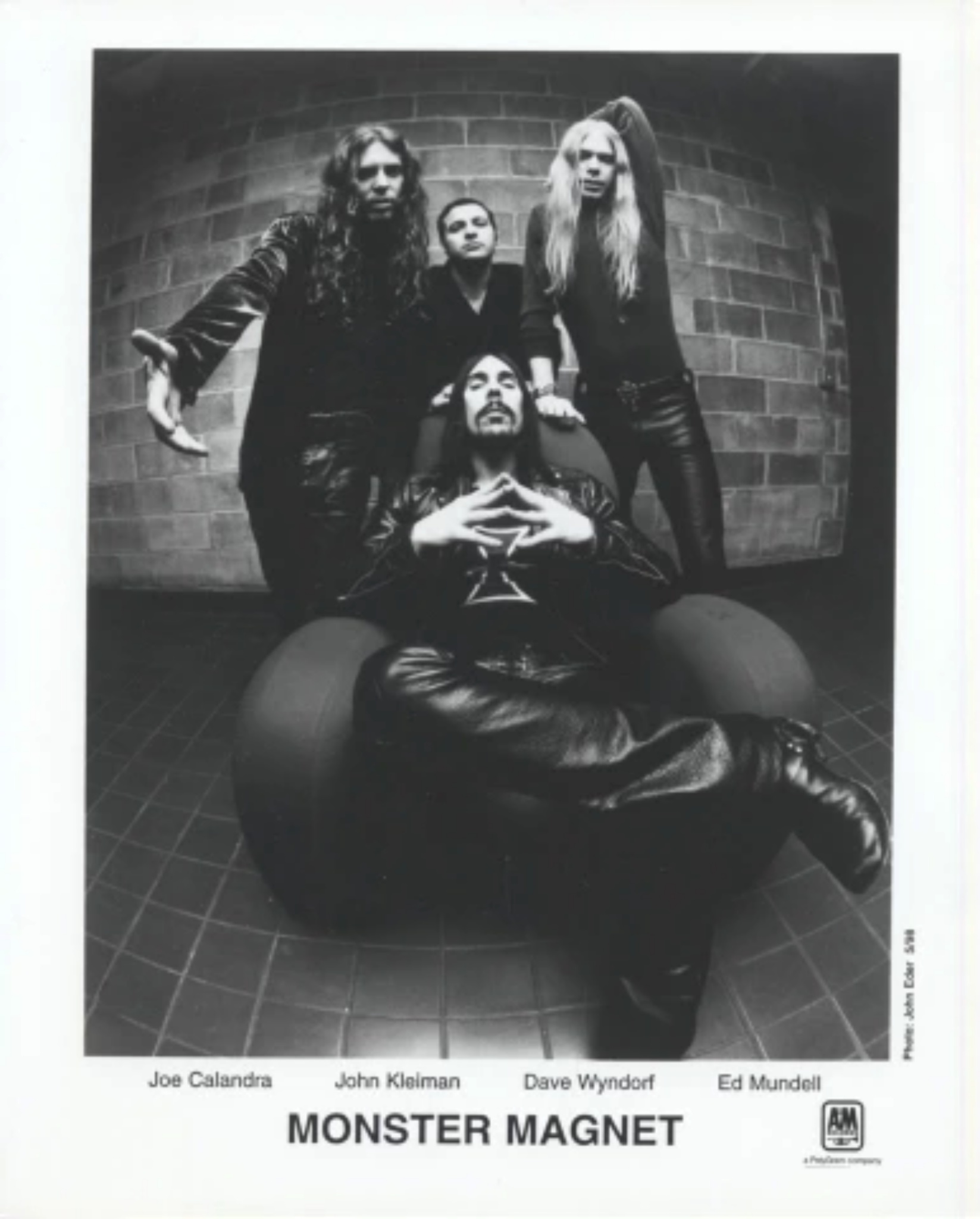
In Part 1, we traced Monster Magnet’s journey from the underground garages of New Jersey to becoming one of the most distinctive psychedelic rock bands of the ’90s. Albums like Spine of God, Superjudge, and Dopes to Infinity built a unique sonic universe – cosmic riffs, acid-fueled dreams, and the grand visions of Dave Wyndorf.
In this second chapter, we arrive at the band’s golden era, when Powertrip and “Space Lord” brought them to the mainstream spotlight. But with massive success came equally massive challenges – tensions, health struggles, and creative downturns. This is a decade marked by both glory and survival.
Act IV – Powertrip and the Mainstream Explosion
After Dopes to Infinity, Monster Magnet had already built a solid fan base, but the true breakthrough was still ahead. It finally came in 1998, when Dave Wyndorf and his crew created the band’s most ambitious and highest-budget album to date: Powertrip. The record shifted towards a harder, more direct sound tailored for arenas and festivals – keeping the psychedelic and space rock roots, but with tighter, radio-friendly structures.
“Space Lord” not only became the band’s signature song but also one of the defining rock anthems of its era. MTV and radio stations played it relentlessly, and the iconic video – with Wyndorf in a cowboy hat under the neon lights of Las Vegas – became an instantly recognizable image in rock history.
The Powertrip tour saw the band perform at major festivals like Ozzfest and play across multiple continents. By this time, Monster Magnet was no longer just an underground cult favorite – the mainstream rock audience had also taken notice. Album sales surpassed one million copies worldwide, cementing the band’s status as one of the leading hard rock acts of the early 2000s.
But the success had a darker side. Constant touring, heavy production schedules, and the weight of newfound fame gradually began to strain the band’s internal cohesion. While from the outside Monster Magnet seemed to be at the top of their game, tensions were building behind the scenes – tensions that would surface more clearly in the years to come.
Act V – God Says No and the Signs of Strain
Following the massive success of Powertrip, Monster Magnet faced enormous expectations. In 2001, they released God Says No, which clearly followed the Powertrip formula: massive riffs, tight tempos, and Wyndorf’s distinctive, theatrical delivery. The album featured tracks like “Melt” and “Heads Explode,” which were strong in their own right but failed to replicate the hit impact of “Space Lord.” While most fans enjoyed the record, critics were divided – some felt the band was leaning too far toward a radio-friendly direction.
By this point, touring had become a constant strain on the members. The long shows, tight schedules, and relentless media attention gradually wore the band down. Although Ed Mundell’s guitar work continued to define the sound, behind the scenes tensions between the members were growing.
The God Says No tour was hindered by both internal problems and external circumstances. Following the September 11, 2001 terrorist attacks, several U.S. shows were canceled, and in Europe the album’s promotion faltered. Eventually, the band slowed its pace, taking increasingly long breaks between performances.
During this period, the first signs of Dave Wyndorf’s health problems began to emerge. Although he did not speak about it publicly at the time, the constant pressure, substance use, and endless travel took a heavy toll. The band was still active, but the momentum that had driven them during the Powertrip era had noticeably weakened.
Act VI – The Setback and the Restart
After God Says No, Monster Magnet fell silent for several years — a stark contrast to their previously relentless activity. Their return came in 2004 with Monolithic Baby!, an album that sought to recapture the energy of the Powertrip era while incorporating a more modern sound and a few unexpected stylistic detours. While the record had strong moments — such as “Unbroken (Hotel Baby)” — both critical and audience reception was more restrained. The songs didn’t quite break into the mainstream, and the band increasingly relied on their loyal fanbase.
Touring remained intense, but Monster Magnet now found themselves more often in underground clubs and on smaller festival stages. Over the years, the gap between past successes and their current position gradually widened. By this time, tensions between Ed Mundell and Dave Wyndorf had begun to surface, eventually influencing the band’s lineup in the long run.
In 2007, 4-Way Diablo arrived — a much more experimental, darker-toned album in which Wyndorf gave more room to melancholy and psychedelic influences. While fans appreciated its honesty, critical response was mixed, and commercially it did not perform strongly.
However, the most dramatic turn of this era happened off-stage: in early 2006, Dave Wyndorf overdosed on prescription drugs, an incident that nearly cost him his life. The recovery was long and difficult, leaving both physical and mental marks on the band. Wyndorf later spoke openly about how the experience fundamentally changed his outlook on life and music.
Although Monster Magnet was no longer in the mainstream spotlight during this period, the band survived the crisis and laid the foundation for their next era — one in which they would return with renewed energy, even if on a different trajectory.
Although the band survived this difficult era, their story was far from over – in the final chapter, we’ll see how they wrote a new page in their own legend. Link: Monster Magnet story part 1. AMEN!
The riffs strike back – this time without psychedelia, bare-knuckled and loud.
For the longest time, Borracho only existed on the edge of my awareness… or rather, the edge of my ears. I was always aware of their greatness, but either the message didn’t get through, or I simply wasn’t ready to receive it.
Then in 2023, Blurring the Lines of Reality found me at just the right time. I listened to that record for days on end, even though a bunch of other great albums dropped that year too. I wouldn’t say it’s been in constant rotation since then, but whenever I wanted a groove-heavy, psychedelic-driven record, Borracho was my go-to. Plus, the sound was flawless.
So I had every reason to look forward to the next album.
And when the time came… ...and I heard those first riffs, I have to admit — I got a little nervous. But slowly, I came to terms with it: just because something is rougher, heavier, more in-your-face, doesn’t mean it’s not damn good. And that’s exactly what this is.
The band doubled down on heaviness – but they didn’t throw melody out the window. I won’t claim there are choruses you’ll be humming for days, but the melodies that are here strike a perfect balance with the massive, stripped-down riffs. The psychedelia has been pushed to the background this time, but oddly enough, it’s not really missed.
And the production? Once again, it hits the mark: not the kind of clean where you hear a mouse fart in the corner – it’s fuzzy, slightly stinky, and big as hell. Like that one shady guy in the beachside dive bar that even the bouncers don’t want to mess with.
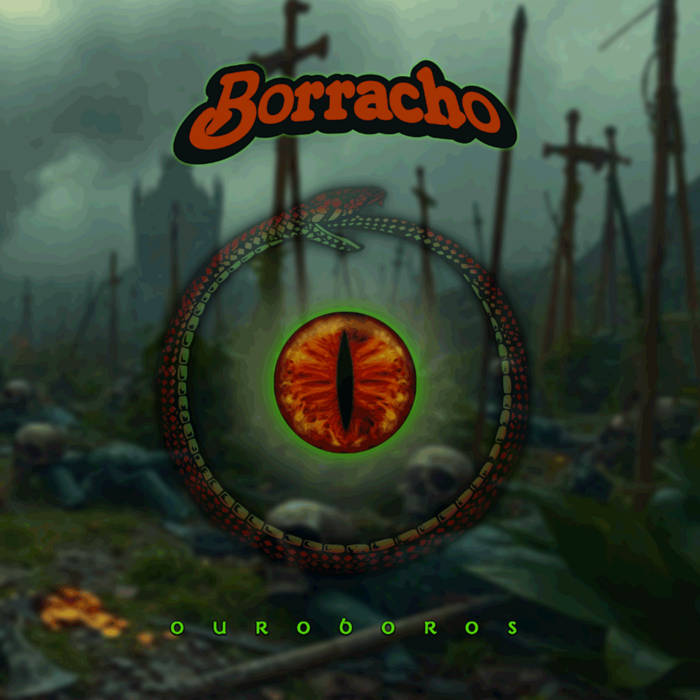
Ouroboros wears its concept proudly: the ancient symbol of the serpent devouring its own tail, representing cyclical destruction, eternal return, and the self-sabotaging patterns of human society.
The album’s lyrical landscape sails into darker waters, woven through with themes of fragile mental health, the many faces of oppression, and the slow decay of society. But don’t expect philosophical musings – what you get instead are dry, sizzling guitars, stomping grooves, and biting lyrics. No endless jams or trippy prog turns – just the core. Hard rock done right: dense, dirty, raw, and real. AMEN!
Szavak és hangok a sivatag merengve lüktető torkából, dűnék felett cikázó akkordok, tétován gomolygó füst, vagy izzó száguldás. "Let the truth be known, Get stoned!"
(Ha zenét töltesz le a blogról, kérünk, hogy 24 órán belül töröld, és ha tetszik, vásárold meg legálisan, mert az úgy jó. Köszönjük.)





Kommentek