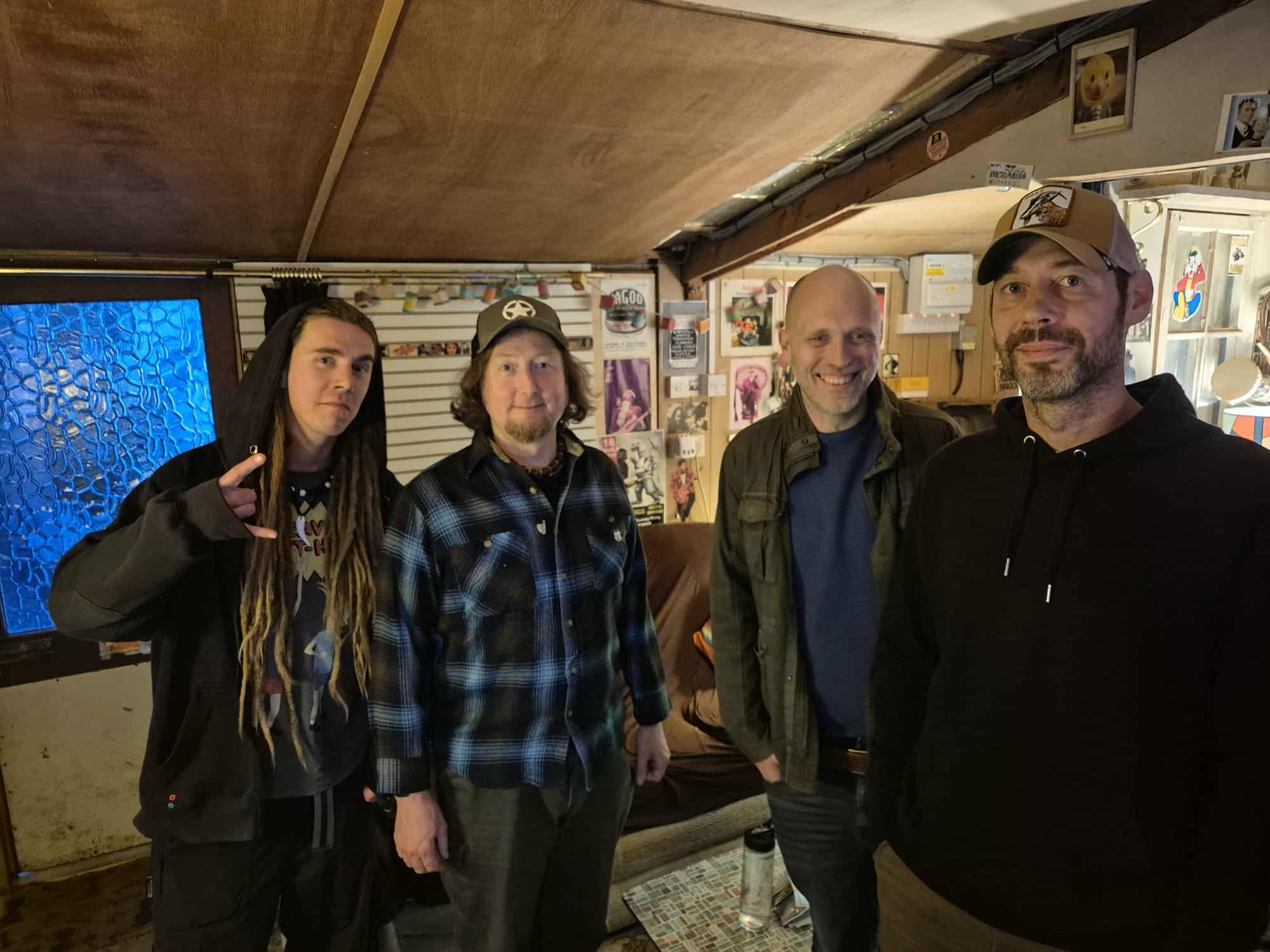
The name Pilot The Dune might ring a bell for those deep into the desert rock world – and for good reason: it's a nod to a classic Slo Burn track. The band formed in 2020 and since then they've been steadily delivering heavy grooves and carving out a place in the UK stoner/doom underground.
They recently dropped a new single, Judas, which leans more into doom territory – and in the background, they're busy working on a new full-length album. In this interview, they talk about their beginnings, musical influences, live shows, surreal gig moments, and of course, what's next.
What follows is them – honest, laid-back, and completely unfiltered. Dive in!
- Tell us a bit about the name Pilot The Dune — why did you choose it? We know it’s the title of a Slo Burn song; is there a special meaning or story behind it? Also, how and when was the band formed, and what was the starting point?
- Honestly it took ages to find a band name we liked, it seemed like whatever random name you put together someone had it already and we didnt wanna go down the name generation route haha. We initially called ourselves 'Agents of vega' but it didnt sit right so finally decided to go with Pilot The Dune' , it felt more like us and gave a nod to one of our fav bands. We formed the in 2020 Steve (Guitar), stafford (Bass) first then Dave (Drums) and finally Mickey (Vocals).
- Your sound is quite distinctive. What musical influences and experiences have shaped your style?
- We all have a love of heavy music, particularly the 90s desert scene right through to the modern sludge/doom scene. I (stafford) love a breakdown and quick tempo change like youd find in dance music/ drum and bass. So our influences come from everywhere really.
- Is there a central message or theme that guides your songwriting, or do your songs come together more spontaneously?
- ( Mickey) There isn't anything like one particular message in the lyrics. Each song is different, unique and tells some story. None of them are meaningless though.
- You released the song “Judas” this year, which has a doomier vibe than your previous work. Does this indicate a shift toward a darker direction in your music, or was it more of a one-off experiment?
- There is definitely a doomier feel to some of the new songs but we still love a fast stoner rock riff so you'll be seeing plenty of that too. Our latest single Judas came out of a jam, Steve(guitar) started playing this riff, we loved that 70s vibe it had and it became this groovey/doomy thing that it is now. We play heavy shows and not so heavy shows so its good to have a variety of songs to suit the crowd depending where we are playing
- How do you see the current state of the British stoner/desert scene? Do you have favorite bands from there?
- The britsh heavy underground scene is in great shape at the moment and growing by the day, so its a great time to be involved. We have so many great bands at the moment within the stoner scence including Dunes, sergent thunderhoof, Ritual king, Psyclona, Allunah, elephant tree, green lung to name a few.
- What are your upcoming live show plans? Are you planning tours in Europe or even overseas? Or participation in festivals? Also, have you had any really surprising or memorable stories on stage that you’d like to share?
- We have shows throughout aug-nov this year in the UK. Wed love to play abroad, just waiting on an invite 😉. We were lucky enough to support SLOMOSA recently in our hometown which was a special moment for us as we were huge fans anyway. Lots of funny shit has happened along the way like our vocalist (Mickey) turning up for a show a week early after driving 5 hours to get there. A smoke machine that malfunctioned fillng the stage to the point no one could see us and we couldn't see our instruments. Sound engineers are always a constant source of entertainment and frustration too.
- What does this music mean to you? Is it more of a hobby, or a serious long-term project?
- I think our lives are filled with music. Despite our eclectic tastes, we were united by heavy sound. It was a hobby that evolved into a band playing underground music some people really enjoy and we'll keep doing it for them as long as possible.
- When can we expect the new album to be released?
- We're aiming for the new album to be written and recorded by the end of the year but could be early next year. We will be releasing one more song/music video before the album is released.
- Where are you recording it and what’s the vibe like during the sessions?
- Once again we'll be recording at ' sickroom studio' in Norfolk, UK where we recorded our first album with producer/mixer Owen at the helm. He's a great guy to work with and gets what we're about and how we want to sound. We record our music live as a band then add the vocals after. Owen felt you'd feel that energy/vibe doing it this way as opposed to tracking one instrument at a time.
- Musically, how is the new material evolving compared to your earlier stuff?
- Generally Steve (guitar) and Stafford (bass) takes turns writing the initial riffs for the songs with Dave (drums) coming up with the percussion and Mickey (vocals) writes the vocal melody and lyrics. With that said a couple of tracks ( zub, space junk) from the first album were written probably 8 years ago before the band was formed. This time round we are writing all the songs as a band and this is reflected in the new material. The biggest difference prehaps is the way we are mixing the new album. We've added more low end and doubled tracked some of the guitar parts to give it a fuller sound which you'll notice in 'judas'.
- Will there be a concept or story behind the album, or will it be more song-by-song?
- As with the first album there is no theme or Story but the songs are either personal or fun/lighthearted depending on the vibe of the song. Mickey has a great way with words so we leave that side of things to him. The next single to be released will be called ' burn the book' which is based on Staffords early life being brought up in a religious cult, escaping it and going it alone and the scars and after effects that it caused. So a real mixture really.
- Do you have any message for the Hungarian stoner community?
Support local and unknown groups. Discover new bands cause there's a lot of talented people near you wherever you are. Also when it comes to making music It doesn't matter where you live in the world with the internet/social media you can get your music out there.
- If your music were a drink, what would it be? Please share your mixing recipe too!
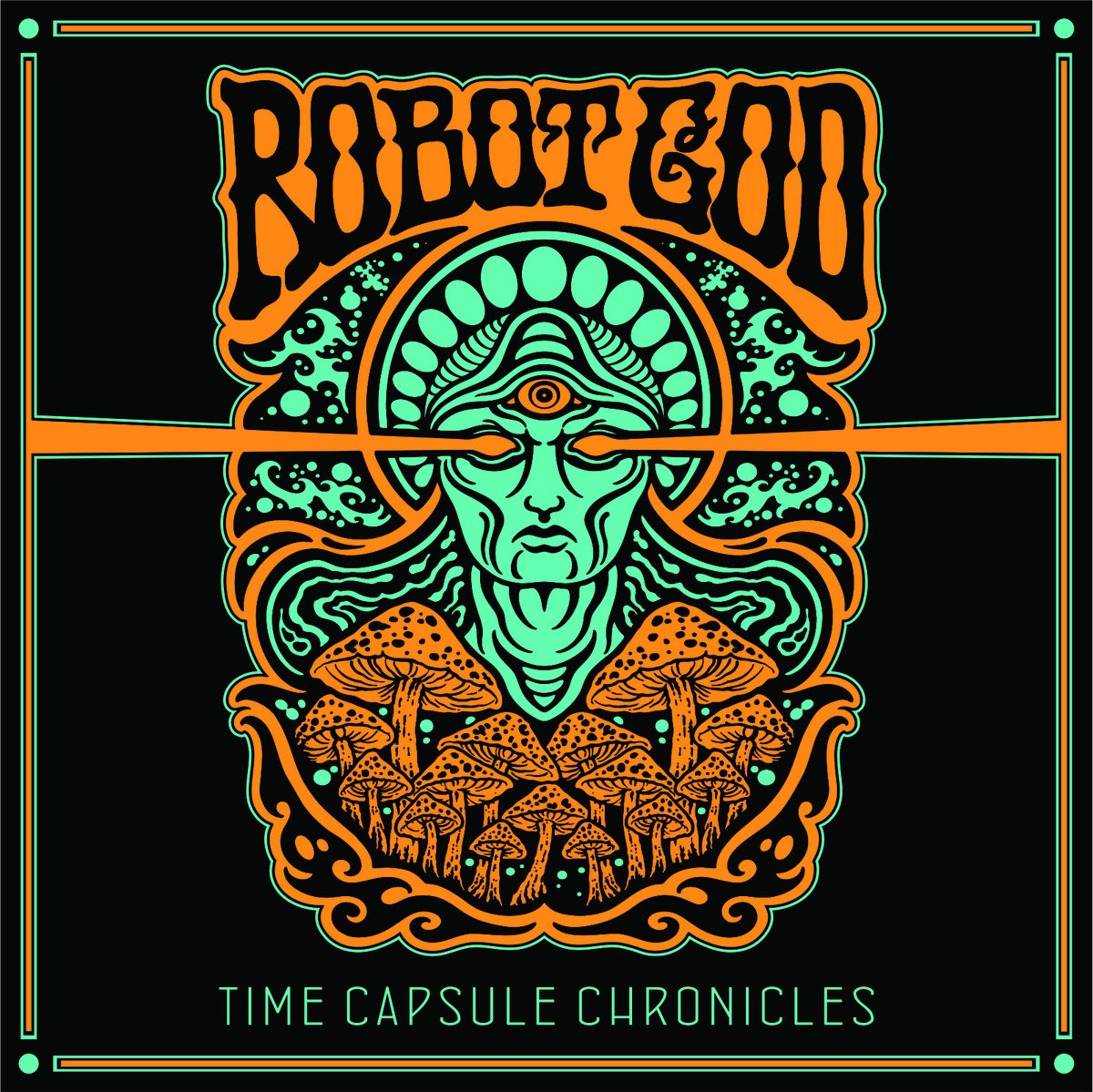
Robot God is an Australian stoner/doom metal band from Sydney that blends heavy, fuzz-driven psychedelic sounds with a unique cosmic sci-fi atmosphere. Their music carries strong influences from legendary bands like Sleep, Black Sabbath, Kyuss, and Electric Wizard, while also venturing into epic space rock journeys that transport the listener to another dimension.
On July 18, 2025, they will release their latest work, Time Capsule Chronicles — a double-CD compilation album that collects the best and most defining tracks from their five previous releases. Featuring over two hours of fuzzy, cosmic stoner rock, it perfectly showcases the band’s diverse yet cohesive sonic universe.
This best-of collection is not only for those who already appreciate Robot God’s deep, atmospheric soundscape but also for newcomers looking to discover a truly unique Australian stoner/doom band. If you love deep, epic musical journeys, psychedelic fuzz monsters, and the cosmic realms of space rock, this album is an absolute must-listen! AMEN!
When Ridge returned in 2025 with two new albums after a long silence, it was far from a typical comeback. It served as a reminder of how raw and original the Scandinavian underground stoner scene once was — and how it still has the potential to be. We talked with Andreas and Jonas about their roots, the new material, and the timeless power of fuzz, riffs, and groove. But after listening to both albums in full, one thing became clear: this comeback deserves special attention. That’s why this second part was born — to dig deeper into Ridge’s rebirth. A few more questions about the material also came up, which the guys gladly answered! However, before that, a few thoughts about the album.
One of the defining elements of Ridge’s sound is the fuzz effect, which is notably thick yet remains clear. This unique blend creates the psychedelic, “gritty” character typical of the stoner genre, while preserving the dynamics of the playing without flattening everything out. The riffs are bold and striking, and the grooves are lively, sometimes even taking on a funky, danceable quality, infusing the music with rhythmic vitality—making Ridge’s sound not just heavy but vibrant and dynamic. The rhythm section is solid but not overbearing: the drums are precise and organic, far from mechanical-sounding, adding an extra dimension to the whole, while the bass cuts through the fuzz to provide a driving force to the groove. The vocals are almost an integral part of the sound, with multi-layered harmonies and atmospheric effects fitting beautifully into the musical foundation; the mix doesn’t try to highlight every detail separately but rather creates a cohesive, unified musical experience.
- Why did you decide to release the songs as two separate albums instead of one double album?
- During the last couple of years this have been like a Catch 22-moment for us. We had ten songs [our original second album] mastered and ready at the vinyl-pressing plant. And we kept on writing and recording songs. That got better and more intense we thought.
When we realized that there were problems with the release, we had so many more songs we wanna release that we actually went: hey, we don’t wanna release that “old” stuff! And then we got the message that the album couldn’t be delivered. So.
After hours, days and weeks of back-and-forth we said: Fuck it - we release TWO albums at the same time!
But it’s tricky because no one has the time, lust or attention span to listen to so-and-so many songs in these days. But we thought; if you dig and really like an artist or band you will try - and then you got TWO new albums to listen to! Oh yes!
Or like this.
It’s better if the whole show at [Netflix/Sky Showtime or whatever] is released at the same time so you can waddle it through instead of waiting a whole week for the next episode…Oh good lord, the PATIENCE these days
- From the new material, it seems that groove is what truly sets you apart from many current stoner bands — there’sa powerful pulse in every song. What sparked the restart of Ridge’s “engine,” and what themes are you most engaged with right now?
- Hmm…We think it’s in the DNA of Ridge. We strive for that “pulse” or flow. And every song we wrote after the re-start was trying to make the next song even GROOVIER than the last one. So that was the spark.
And.
Add more percussion.
A secret and (if we might say) interesting thing about these album is that if you listen to each song you will hear percussion on every last one: cowbell, maracas, vibraslaps, timbales, tambourines, guiros, shakers, cheapy saucepans (oh yes) and a whole lot more. We worked really hard with percussion to get the right “swing” on every song. It was not intended from the start but got essential in the process. Groove does matter- and so does percussion!
- Did the Countydelic album get a new mix before the re-release?
- Njae, it’s a vinyl-like master so it’s quite different but no new mix. Just better overall.
- Nowadays, many prefer shorter releases for easierlistening, yet you put out two full albums. I was a bit worried it might be too much, but once I start playing them, I don’t want to stop — whether in the car, mowingthe lawn, or working on projects, the music pulls me in. How do you see the longer playtime fitting into today’snoisy music world?
- I think that’s the new catchphrase for RIDGE- Lawnmower Rock! Right up the alley of “grass”. Haha!
- But we really like that you dig them through and through. For real. Thanks! Your response to the albums is actually what we sought for. Maybe we won’t find many new listeners with all these songs, but some might dig it. And then they hopefully dig the whole shebang.
- If you had to sum up Ridge’s “2025 message” in threewords, what would they be?
- Go-Dig-In!
- Your comeback doesn’t feel nostalgic but very alive. How did your environment react when you first said, “Hey, Ridge is back”?
- No one cared. Unfortunately (Haha)! But there was (is) this guy. He’s actually the one person that has driven this band to action: Fredrik Neuman. And he is the force behind all these new songs. If he didn’t like what we wrote, we didn’t go further with them. He’s an old friend to the band that is honest about the songs and he’s the main reason that RIDGE is alive. So all love to him!
- If Ridge was a scent, what would it be? (Dusty forestpath, smoky garage, coffee-stained carpet, handssmelling of gasoline…?)
- Well, the smell of new lawned grass. With a sting of gasoline and old-aged rum. Fresh, summerish, stingy and full of hope for the future!
- What current bands are you listening to these days? Arethere any fresh acts or artists that have really caught yourattention?
As we mentioned in the last interview we like Hästspark. And they just released a new single called ”Sounds of her Nature” that is really good. And we think Johan from Dozer has had his hands on that recording as well.
- If you could send a message to younger music fans oremerging bands, what would it be?
- Don’t try to be Kyuss, they’re just too good... Just write new songs, rehearse like maniacs, have fun and find your own pulse in your music. That’ll do just the trick.
Roaring with intensity and blabber comes non-distinctive answers from Malmö, Sweden through Andreas Bergström (songwriter, guitar, vocals) and Jonas Jönsson (songwriter, bass, percussion) from Ridge. Wednesday 2/7-25.
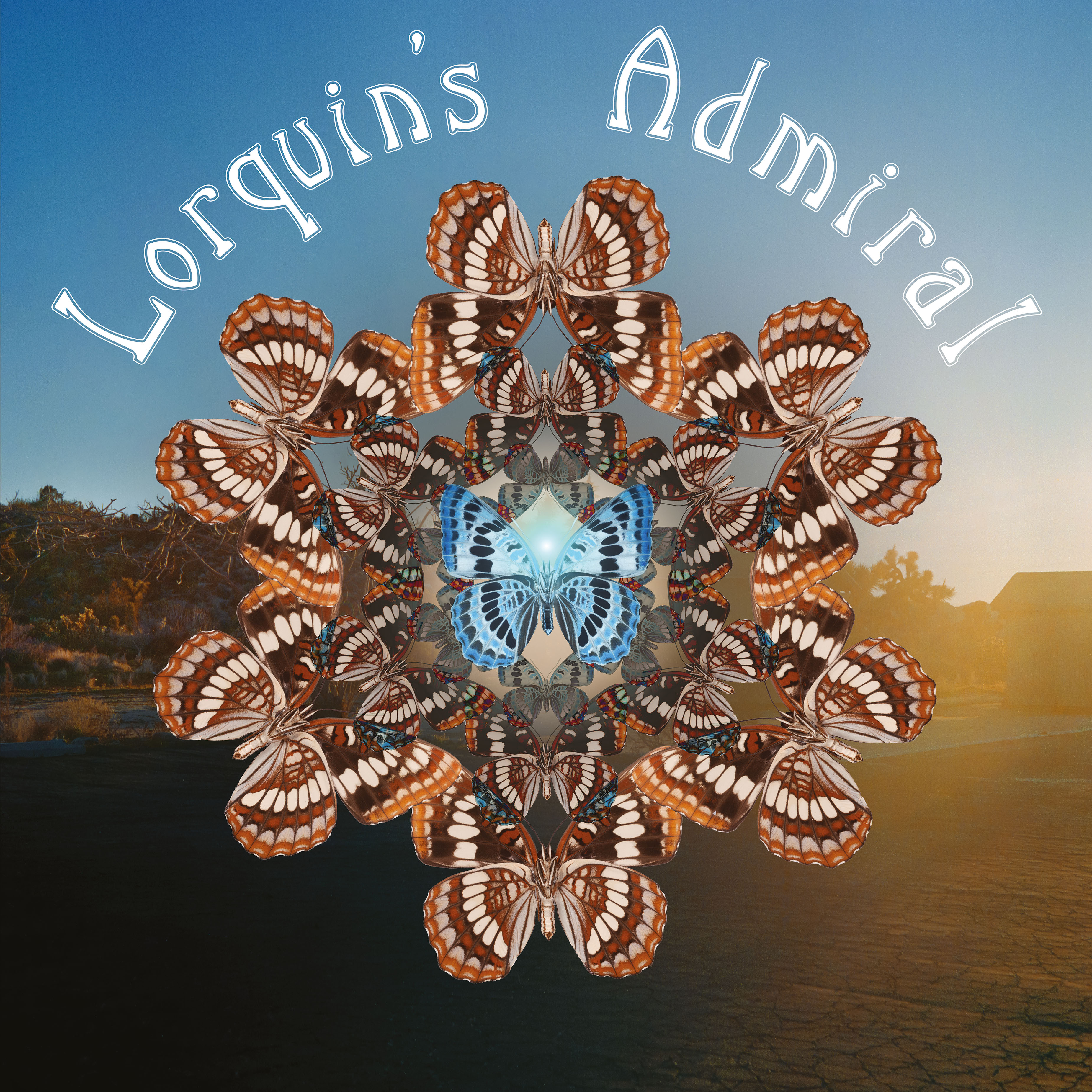
Another remarkable album has arrived, born from the collaboration of Dandy and Dawn Brown alongside legends like Marlon King, Nick Hannon, Steve Earle, David Angstrom, and Country Mark Engel. Lorquin’s Admiral, a supergroup, released their debut album on June 27, 2025, under Argonauta Records. The album blends the best traditions of desert rock, psychedelic, and alternative rock. It evokes the spirit of the ’90s while delivering a fresh and energetic musical experience.
The tracks “My Blue Wife” and “My Blue Husband” contain some of the deepest emotional layers of the album. These songs present a unique storytelling approach by alternating male and female perspectives, enriching the album’s complex and multifaceted soundscape. The harmony of vocals and instrumentation provides an intense, intimate experience, revealing the album’s most profound feelings.
The track “Aren’t We” creates a deeply contemplative atmosphere. The minimalist video, dark tones, and the band’s intense emotional performance invite the listener on an inner journey where the song’s philosophical questions unfold.
“Inexplicable Things” stands out as one of the album’s most dynamic and experimental tracks. Its video portrays the band in surreal, dreamlike landscapes and scenes, visually echoing the song’s complexity and heavy psych-rock style. Both videos are essential parts of the band’s artistic expression, offering deeper insight into the emotional and philosophical content of the songs.
Finally, “Burn and Heal” is a powerful, dynamic track exploring the duality of pain and renewal. The ebb and flow of the melodies combined with intense guitar work convey a healing energy, speaking simultaneously of loss and new beginnings.
The sound is warm, featuring analog fuzz, groovy drums, and occasional post-rock-like ambient moments (as in “These Lovely Things”). According to critics, the album carries both the purity of desert-stoner rock and the emotional soundscape of alt/psychedelic music — and most importantly, it is highly accessible, filled with harmonies, melodies, and riffs.
Overall, Lorquin’s Admiral’s debut album is a rich, emotionally layered work that pays tribute to the desert and stoner rock traditions of the ’90s while expanding the genre’s boundaries with fresh and exciting approaches. Its warm sound, the harmony of melodies and riffs, and the deep emotional charge offer an experience recommended not only for stoner rock fans but also for lovers of psychedelic and alternative music.
Inspired by this outstanding work, an interview was also conducted with the band members, providing an even deeper look into the background and creation process of the album.
I’m curious about the origin story of Lorquin’s Admiral. Did the songs come first and then you looked for musicians to join, or did someone suggest creating a new band from the beginning?
Dandy Brown: Back in 2017, I was asked to contribute to the Yawning Sons project that Nick Hannon and Marlon King were putting together. Eventually, those recordings would become the Sky Island release. Nick and Marlon are the founding members of the group Sons of Alpha Centauri, and along with members of Yawning Man, they had done a previous album entitled Ceremony to the Sunset back in 2009. Being a fan of Sons of Alpha Centauri, Yawning Man, and the first album they recorded together, it was a real honor to be asked to sing on a few tracks for their project. After contributing to the Sky Island sessions, Nick, Marlon, and I felt such a comfort in writing together that we decided to see if we could construct another album. We spent about a year passing riffs back and forth, and eventually gathered enough material to start putting together the Lorquin’s Admiral album. Throughout that process, I had started recruiting people I thought would sound terrific on the album. For some of the songs, it was very obvious that Dawn’s voice would fit perfectly. I also knew that Steve Earle’s drumming style would be a perfect fit, and that Dave Angstrom and Country Mark Engel would be able to fill critical roles on the record. Really, everything fell together so organically and easily that it’s almost like Lorquin’s Admiral was a band far before this first album. Sometimes, it’s just that easy.
The lineup features legendary musicians, each with a very distinct style. What was it like working together in such a creatively rich environment?
Dandy Brown: Quite honestly, I have to be one of the luckiest musicians and producers on the planet because I have always worked with great performers on just about every project I have ever been involved with. From Hermano to Orquesta del Desierto to the Fizz Fuzz to Lorquin’s Admiral, every major session that I have worked on has been comprised of musicians who have distinct and wonderful styles that add to the music. When it comes right down to it, as far as musicianship goes, I usually feel like I am the weakest link in the room. I mean, how does one compete with vocalists such as John Garcia or Pete Stahl? Those guys are absolutely phenominal singers. I have had the absoute honor of being able to produce sessions where Mario Lalli or David Angstrom or Country Mark are playing guitar. In other sessions, I have been able to track Steve Earle or Alfredo Hernandez on drums. I mean, come on, all of those folks are absolutely incredible at their craft. I have also had the ability to work with great engineers such as Dan Lucas, Mike Riley and Chris Koltay. One of the things I always tell people is that my secret to making albums is to surround myself with musicians who are badasses . . . people who can take the kernal of an idea that I come up with and make it ten times better than anything I could ever do alone. To anwer your question, though, working with the musicians I have been able to work with over the years has made all of my musical experiences absolutely wonderful.
The album feels incredibly cohesive – even though everyone involved brings a different style, you really managed to find a powerful common ground. Did the songs come together easily?
Dandy Brown: While we worked on the material for the Lorquin’s Admiral album for about a year before we went into the studio to record it, actually the songs came together very easily. While I do not consider myself a virtuoso or even that great of a musician, I do believe that my strongest attribute comes with knowing how to bring together the right people for producing an album. In this sense, when I get a feeling about which musicians and engineers will work well together then the rest always seems to flow very easily. Lorquin’s Admiral was no different. Once I heard the initial sketches for the songs that would appear on the record, I pretty much immediately knew who would fit into the soundscape we wanted to create.
The album is so layered and dynamic that every time you listen, you discover new moods and sonic details. In your opinion, why don’t more albums like this get made these days? (With all due respect to the exceptions!)
Dandy Brown: That is quite a compliment about the Lorquin’s Admiral record. It is always very important to me when producing an album that we are finding nuances and parts we can enhance to give the album more depth. This isn’t to say that all albums or productions need to focus upon those kind of things because many albums are very beautiful and successful without subtle layers. This has just always been my production style, but I have also worked on albums where everything was straight forward and done with minimal tracks. I do think dynamic records are being made all the time and that this isn’t something unique to me. I do think, though, that a lot of the music being produced and sold in mass has an entire formula behind it and that this formulaic type of music is what the majority of people want . . . thus the reason major labels provide that kind of music for public consumption. Really, if more people wanted unique records then that’s what would flood the market. Unfortunately, we don’t live in that world. The world we do live in is one where most people want clones of something that has become popular previously. There was a time when people sought out new and unique sounds and song structures. I think that was a time before shows like America’s Got Talent came into being and they squeezed creativity out of the mix. Let’s be honest, though, and realize that most people want something safe and easy when it comes to music . . . and art in general.
Who came up with the name Lorquin’s Admiral (a species of butterfly)? Is there any particular meaning behind the name?
Dandy Brown: Actually, when we first started thinking about putting the Lorquin’s Admiral album together, I started looking for a name for the band and came across a web page that had all the various North American lepidoptera listed on it. The name Lorquin’s Admiral just immediately popped out to me, so I wrote it down. During the year where we were writing material for the record, we all contributed ideas toward the name, but at the end of the day we kept coming back to Lorquin’s Admiral. It just seemed to fit everything we wanted to achieve with the group. Not only does the Lorquin’s Admiral have some of the most unique colors of any butterfly, there is also a kind of psychedelia associated with butterflies in general. Additionally, it was very important to Dawn and I while writing the lyrics and melodies to the album that we were creating something that was inspiring, uplifting and positive with this collection of songs. While there is an entire gamut of emotions and juxtapositions that run throughout the themes on the record, in the end we wanted to write about hope, love, friendship and the belief that these things still exist in a world where empathy can still rise above the negative things that seem to bombard us on a daily basis. The image of the Lorquin’s Admiral seemed to encompass all those things and fit the band perfectly.
The duality of “My Blue Wife” and “My Blue Husband” is really intriguing. Could you share a bit about the concept or story behind these tracks?
Dandy Brown: Haha. We get this question in just about every interview we have done for the record. When we started writing lyrics for the record, Dawn and I decided that we were going to take two of the songs and write them to each other. Really, the lyrics for those two songs are the most straight forward words on the album. There really isn’t any hidden meaning or hidden concept within those two songs. They both reflect the passion, love, and trust we have for each other. I think the most risque part about both songs is the sexual energy that comes across in them. It’s as simple as that, and again reflects the goal we had to have the album reflect positive and uplifting themes.
You and your wife already have a band together, The Fizz Fuzz, but here you chose to collaborate in a brand-new formation. Is Fizz Fuzz more of an intimate family project while Lorquin’s Admiral is something broader and more experimental?
Dandy Brown: The Fizz Fuzz is most certainly our main focus and offers us the ability to explore the very quirky kind of rock that I feel is very unique to Dawn and I. I suppose you could call it an intimate family band, but we have two extremely wonderful and talented musicians who have contributed significantly to the development of the Fizz Fuzz catalog . . . Steve Earle and Gabriele Carta. While Lorquin’s Admiral definitely has it’s roots in being more of a project, it seems to have grown quite a bit from those roots and into more of a band type of thing. I really believe that every band I have been involved with or continue to be involved with allows me to explore multiple avenues of expression, so in that sense they are all extremely important to my musical journey. The key to me is to keep exploring and to try to expand my musical experiments as far as I can take them.
You’re involved in so many things right now – Hermano is back on stage, I’m guessing Fizz Fuzz is still active, you have your family, and now this new band. How do you manage your time and keep all these projects balanced?
Dandy Brown: Yes, sometimes it does seem like there are many many plates spinning all at once, but that is the beauty of music and the wonder of being alive. Most definitely, the Fizz Fuzz is alive and well, and we are currently in the process of mixing the new album we recorded late last year. We hope to have a release date for the new record in 2026. With that in mind, though, I continue to write and demo all kinds of different music for whatever band the songs may fit with. I don’t really look at it as managing my time, but rather using my time to its utmost advantage. Sometimes, I feel as though it is the things that come organically, naturally, without too much effort that turn out to be the most fulfilling.
Are there any plans for live performances with Lorquin’s Admiral?
Dandy Brown: Every member of Lorquin’s Admiral has expressed a desire to get out and perform the record live. The difficulty I always seem to create, though, is that I form projects with musicians who don’t live in the same town. Actually, I usually form bands where all of the members live on different continents! Haha. This does, though, create a logitical nightmare when trying to figure out how we can pull together rehearsals or even afford airfare to get everyone to one location. We are definitely looking into ways we can make Lorquin’s Admiral shows occur. I know that I would absolutely love to see how the energy of the band transfers to a live situation.
How was your time in Europe during the Hermano tour – aside from the shows themselves? Did you get a chance to relax, explore, or draw inspiration from the experience?
Dandy Brown: Actually, Hermano only did the one-off show at Hellfest. I don’t have anything to publically announce yet, but we are definitely exploring getting a little more active in 2026. As for our recent trip to France, though, yes, we had an amazing time. Dawn and I arrived in Nantes about a week earlier than the rest of the guys in Hermano, so we had ample time to explore that part of France and for Dawn to have some time to shoot a few dozen rolls of film. Dawn, of course, is a professional photographer here in California, and that, maybe even more than music, is her absolute passion. She is truly a tremendous photographer, and so it was just an absolute joy to watch her work and to see how delighted she was to have the time to use the tools of her profession. Of course, we are best friends and lovers as well, so to have time together in a charming French city surrounded by the beautiful French countryside . . . well, it is easy to imagine that our time together is always wonderous.
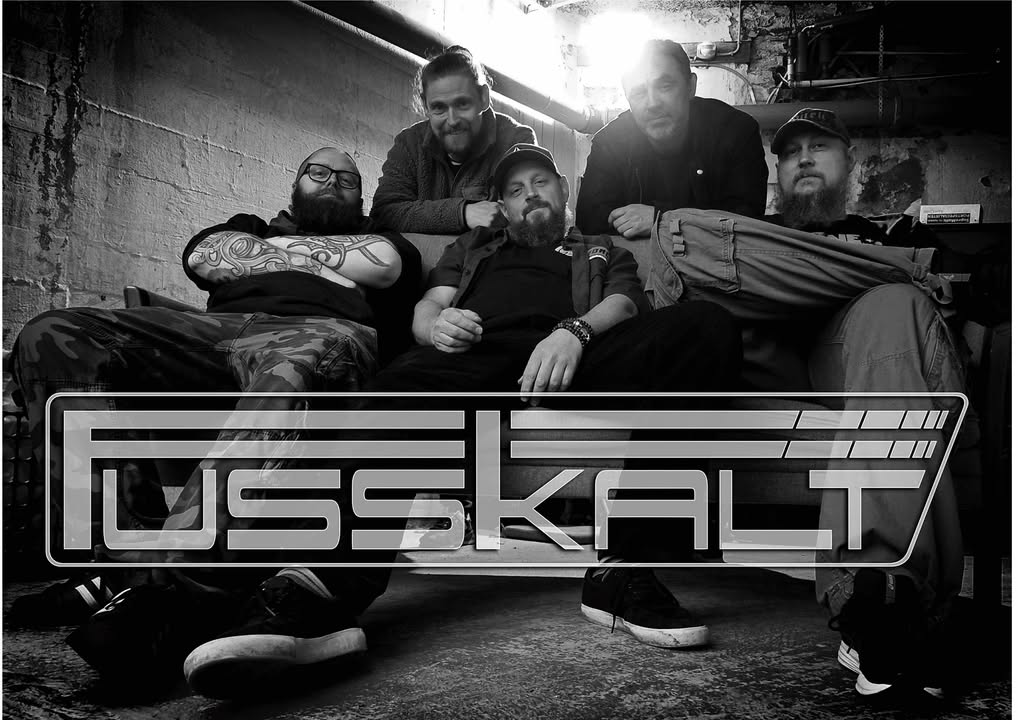
Fusskalt might not be a household name for every stoner rock fan — but it should be. Their new EP, Faceless Man, marks a clear step forward: musically more mature, yet still raw and honest.
This interview offers a closer look at who they are, where they come from, and how they stay true to themselves in an ever-shifting underground scene.
Their answers reveal more than just musicians — they’re teachers, graphic artists, gardeners. But above all, they do it with passion. They move slowly, but always forward.
Origins and evolution
How did Fusskalt get started? What inspired you to form the band? -Many years ago, I (Nick – guitars) got together with and old drummer friend of mine, Mike – whom I played with way back in the day, when I first started getting into music and band relations. None of us had been playing in a band for some years at the time we got together again, and we thought it’d be fun. We just started writing and playing some tunes out of his apartment, and it was not really stoner rock or anything of the sorts. We both came from death metal and thrash etc. so it was more in that direction at that time. So the initial inspiration was just the absence of music (from a band perspective) in our lives – and the desire to play again.
Your name comes from Danish slang – is there a story or joke behind it? -Technically correct, though it’s the German equivalent of the Danish word “fodkoldt”, which doesn’t really have a direct English translation, but we usually say that it’s a term describing when it’s not cold enough in your house, that you put on a sweatshirt, but still cold enough that you put on your slippers. I guess the English word would be footcold? Anyways – it was actually just a fun working title, but it quickly grew on us and not long after, I created the original logo – and then it was kinda final. Rolls nicely of the tongue though, right?
Your sound has evolved a lot since the early EPs. Was this a conscious shift or a natural progression? -Like mentioned above, it didn’t start out as a stoner rock project. But in the early days of Fusskalt – when we had actually formed the band and had a full crew (Mike had left us at this time, and was replaced by a guy called Simon), I started getting into the Stoner rock genre, and almost instantly fell in love with it – like it was the missing piece of the puzzle. At one point we were in the writing process of the track “Dead man walking” and at some point when it was pretty much complete, and we did a full playthrough, we all stopped and looked at each other going “Fuck yeah – this is right – this is where we’re going”, and from then everything started revolving more and more around the stoner genre. Over the years and the various releases, we delved deeper into everything this genre had to offer, and we got bolder, and more adventurous. I remember when we wrote “Chasing Unicorns” we thought it was really cool playing it, but we had doubts if it would actually make for a good track on an album. However, when we heard it for the first time after recording it, and it having passed through the capable hands of our producer (Henrik Hjortnæs) back then, our doubts we’re laid to rest instantly. It turned out to be one of the best tracks on the Overdrive EP, and it made us feel confident, that we could also pull something like that of. But yeah – I think it’s a natural progression – us being 5 guys from different musical backgrounds, and with a constant flow of inspiration. We try to bring something new to the table every time, but still stick to our guns to some degree. Not trying to reinvent the wheel, just having a great time.
Releases and sound
The Overdrive and Songs for Speedin’ and Crashin’ era had a raw, energetic vibe. What do you remember most from that time? -It was definitely a defining time. Our first material, first recordings and following the release of the Overdrive EP, also our first live shows. Everything was luckily very well received, which made us push even harder and try to broaden our horizons. I believe one of the reasons the tracks feel more raw and energetic, would be due to our musical backgrounds (ranging from hardcore, death metal and thrash mainly) and our insecurity venturing into this new genre. We kinda did what we knew from old times and previous band relations, while at the same time trying to harness that power in a new (to us) genre, that called for… a little bit of restraint.
Intercooler sounded more polished and restrained. How do you reflect on that period? -The intercooler tracks saw everyone in the band coming much more together in the writing process in a joint effort, rather than just me or Thomas writing a draft, and then all of us doing the final tweaks together at band practice. We did a lot more writing together at band practice, and it felt really good. I remember when we were writing “Falling Down”, which was an everlasting process - we could never get the start just right. Something always felt a bit… off. At some point we had just played it, and Lars (former lead singer) wanted to try out something, but he wanted to just have a single cue guitar, and Thomas started playing the acoustic intro as it ended up being, and Lars fell in with the most fragile and soft vocals – and all of us just dropped our jaws and thought “wow… there it is! That’s how it’s actually going to start”. And this was just Lars testing some phrasing or vocal melody, but it turned out to be exactly the start this song needed. The recording process was not as smooth as previous releases. It was quite fractured, as we had a hard time getting the schedules to line up for everyone, especially our producer. So it took a long time finishing. For the first time ever, we also had to have the mix and mastering done elsewhere, and we had 3 guys do test mixes, before we settled on one. This was new to us, but also quite eye-opening, as we got some very different results from all 3 guys. I think it was also an eye-opener with regards to our sound and maybe trying to pull in another direction. I always wanted us to be more gritty and dirty sounding, and some of these guys did just that. But in the end, I think it was too overwhelming at the time, so we stuck with the one who made us sound more familiar. Bit more like we were used to with Henrik, who had a more punchy rock/metal approach. But the other mixes still stuck with me, and I think they subconsciously affected our choices for Faceless Man.
The Faceless Man EP received great feedback. How did it feel to return with new material? Can you tell us about the writing and recording process? -I can’t begin to describe how fucking great it feels. And also a bit nerve-wrecking. We had a long hiatus during covid, the departure of Lars and finding his replacement, so for everything to finally come together is a cathartic relief. And for the new material, and Niko to be so well-received, just makes it worth every minute spend rehearsing, recording, producing and yeah… It’s just… amazing. Most of the material on Faceless Man is actually from back when Lars was still with us. Except River of Gold, which was the first track we did together with Niko. This track was actually created entirely around a single bass-line that Janus came up with at band practice, but it quickly gained a life of it’s own – and Niko was even quicker getting into some vocal bits, and we tried to work around this new “instrument/tool” that was suddenly in our midst (not calling Niko a tool…. Or am I?) This process was very rewarding, and we got to try out so many different approaches, and when we finally settled, I did what I always do, and created a “dummy” in Pro Tools, and then we recorded some test vocals. This was later used for Jonas to record his final drums, and then everyone else along with it. This is usually the process for when we’re recording – dummy/cue created in Pro Tools, then drums are laid down, then guitars, bass and finally vocals. Pretty standard, I think. But – this time, we did all the recording ourselves. Having learned so much from Henrik over the years he was acting as our producer (which was all releases up until, and including Intercooler), we decided to go at it on our own. Partly to be in complete control, but also to make sure it would fit into everyone’s schedules accordingly. So Jonas recorded himself, Thomas recorded himself and Janus, and I recorded myself and Niko – and put everything together and did some test mixing and preparations for final mix “out of the house”. Janus came across a post from Kent Stump (Wo Fat) who was offering his mixing services out of Crystal Clear Sound studios, and it soon became apparent, that he was our guy – and soon after, the raw tracks were sent to Texas. Kent was such a pleasure to work with, and having someone who has almost LIVED the genre give his take on our sound, proved to be the right decision. Kent made us sound just right, and very true to how we think we actually sound. So a match made in heaven for sure.
Has your lineup changed over the years? How did these changes affect your music and workflow? -It has – but not drastically though. Our first drummer, Mike, actually left soon after we hit rehearsals at an actual physical band practice. He is still credited for drums on the track “Let’s get away”. Simon, our second drummer, played with us up until we had released the first “Songs for speedin’ and crashin’”, and then Jonas took over. From then, the lineup stood firm for many years, and through the release of both Overdrive and Intercooler – until covid hit, and Lars eventually left. I don’t think anything really changed with the drummer replacements, but it sure did with the arrival of Niko. His energy and lyrical approach actually makes us work a bit more around the vocals than previously, rather than trying to fit the vocals into the music. But apart from that, we do what we do from a process that hasn’t changed that much over the years. If it’s not broken, don’t fix it.
Lyrics and atmosphere
Songs like River of Gold and Sirens feel emotionally deeper. Was this a conscious lyrical direction? -Not quite sure of Niko’s motivation behind River of Gold – maybe he can elaborate? Niko: Thanks for the question. And yes. It came from a part of my own frustration and pain. But the song is basically about the struggle of someone really close to me, trying to overcome cancer, and everything that comes with it. -Sirens was written by Lars and, as I recall it, inspired by the tv-series “Mr. Mercedes”. Now I don’t believe Lars is a latent killer, or that he struggles with demons quite in the same way as “Mr. Mercedes”, but I think he found inspiration in the desperation of the person who drove the car full speed into the human line at the job-center. What took him there? Loneliness? Lack of grasp and control of his own destiny? Something like that perhaps.
How do you write your lyrics? Is it a collaborative effort or mainly one person’s job? -It’s usually a one-person job, but not always the lead singer’s. I wrote the lyrics for Faceless Man, but I usually stay out of the lyric business and leave it to the lead singer. I will however work with the lyrics together with the lead singer, when we’re doing vocal test recordings. There may be words or sentences that either rhyme better, sound better or make more sense in the context of the rest of the song, and in this process, we try to squeeze the best out of it.
Scene and connections
How do you see the Danish stoner/desert rock scene? Are there local bands you follow or collaborate with? -We generally try to reach out and “assemble the troops”. We’d like to see more stoner/sludge/doom themed shows around. Before covid, we actually organized a bunch of stoner themed shows, under the banner “Stonerado”. Hard work, but great fun. Met a lot of amazing bands, gained many friends, and generally gave us the feeling that there IS a scene. Some of the bands we played with back then are no more, but others have since emerged, so it’s a scene in constant growth and development, and we’ll probably pick up Stonerado again at some point. I think we will have to do something with Dread Witch, Olm, Zeup, Supercollider, Patron in the near future, just to name a few.
What kind of connections do you have with the international stoner community? -That’s probably one for Janus (Bass), since he’s mainly doing all the booking/SoMe etc. Janus, wanna chip in here? Janus: We are present in so many of the different Stoner Rock groups, talk to loads of people, but what really defines this way of contact is ‘community’. All sorts of different people with one thing i common, the music. From that friendships grows across borders, and you get to see what moves in the local scenes around the world. This also helps with inspiration for our own music, and can make for gigging together if the stars line up just right.
The road ahead
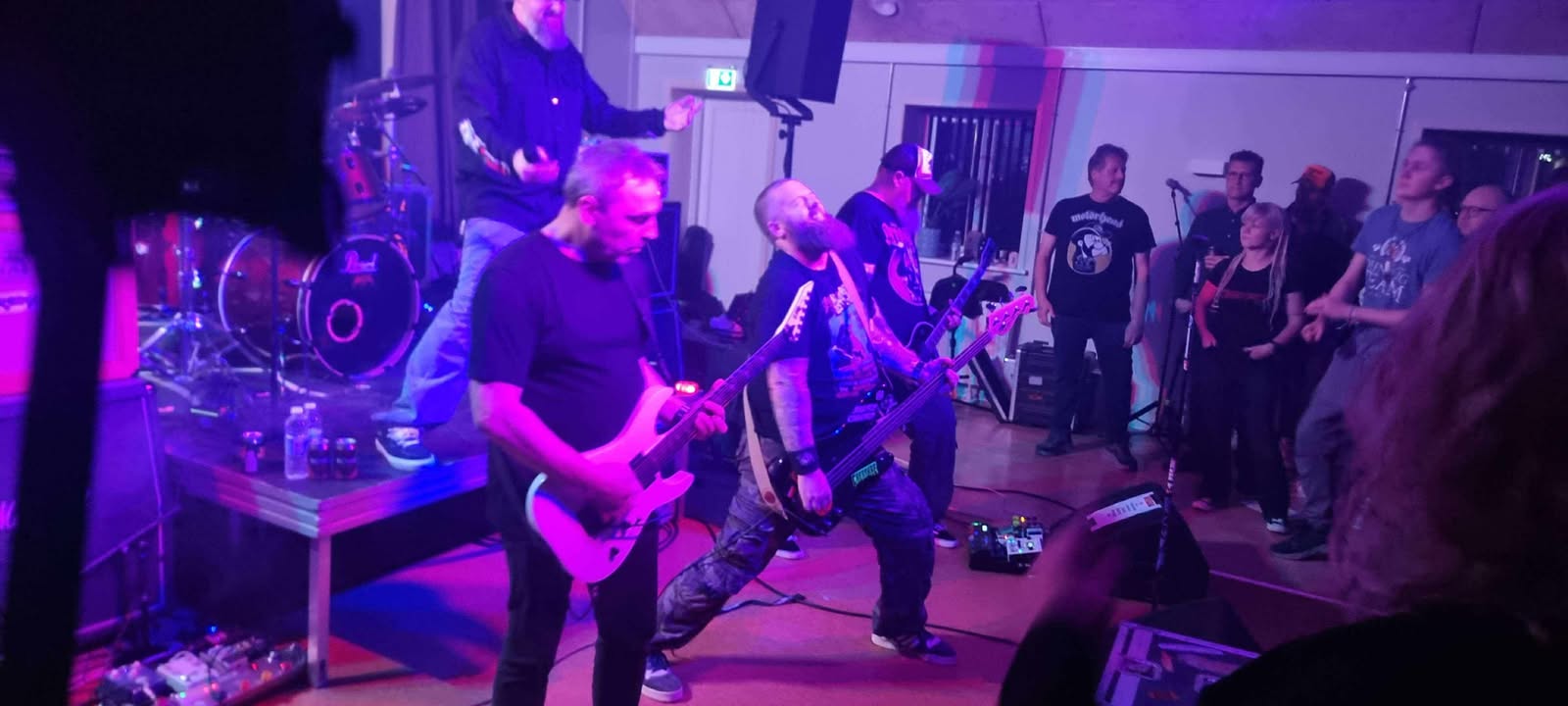
Are you planning new releases or tours after Faceless Man? -We’re actually thinking of recording again sometime in the near future. Just a 3-track thing, like Songs for speedin’ and crashin’. We have two tracks almost ready and need to write a third. We want to do this, mostly because we want to make more material with Niko, to make him feel more at home, and also to see where he takes us – like we did with River of Gold. So yeah – maybe something new in less than 7 years? We’re planning some concerts and will try to get out as much as everyday life allows it, but generally speaking it looks like actual touring is becoming less and less viable even to established bands and the chance of just breaking even on a small tour seems less likely now, with more and more venues picking the pockets of the bands and their merch sales. I don’t think that’s a hassle we actually want to deal with. Takes the fun out of playing. I think we’ll do what we usually do – assess if a given job is worth it for us either financially or if it’s something we really want to do because of the other bands or the venue or whatever. It’s a difficult discussion. While we want to play, we don’t want to pay to play. That’s not how live music should work.
What does Fusskalt mean to you nowadays – a hobby, a lifestyle, or both? -It’s definitely a bit of both. While we all love playing in Fusskalt, and want to dedicate as much time as possible to it, it does not pay the bills. So everything is a balance between work, families and of course actually getting some Fusskalt shit done. We’re by no means fast movers – but we DO move… usually forwards too.
Fun question
What’s something your fans definitely don’t know about you, but you think deserves a little spotlight? 😄 -Just like Superman is just a nervous reporter when he is not Superman – when we’re not rock stars, we’re just two school teachers, two 3D graphics designers, and one glorified gardener. How’s about that :D
Szavak és hangok a sivatag merengve lüktető torkából, dűnék felett cikázó akkordok, tétován gomolygó füst, vagy izzó száguldás. "Let the truth be known, Get stoned!"
(Ha zenét töltesz le a blogról, kérünk, hogy 24 órán belül töröld, és ha tetszik, vásárold meg legálisan, mert az úgy jó. Köszönjük.)





Kommentek