Default style- Alternative style

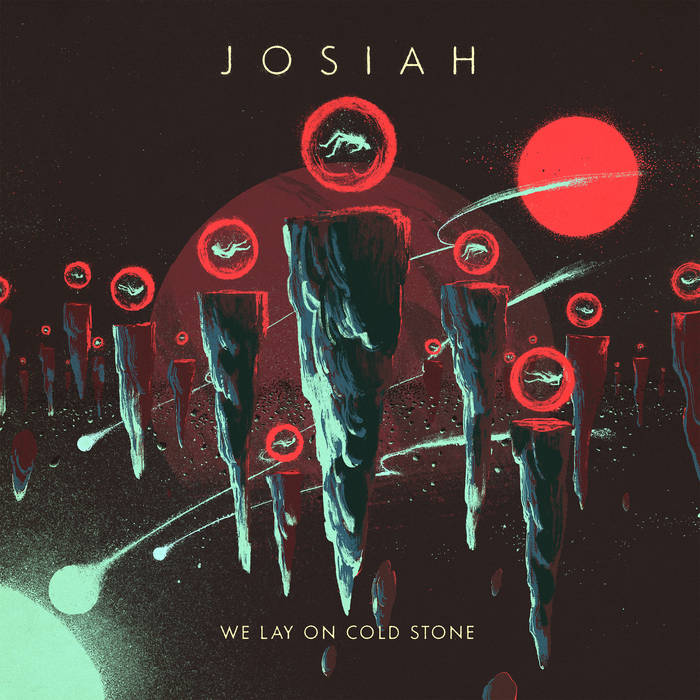
Josiah – We Lay On Cold Stone (2023)

 To truly understand and appreciate Josiah’s We Lay On Cold Stone, you need to hear the earlier records or at least place it in context with the rest. It’s not an easy listen, but precisely because of that, it offers something deeper than just a groove-oriented album you play while drinking beer. This record comes from a much deeper place where fuzz no longer measures the weight of the riffs, but the passage of time itself.

 In the early-to-mid 2000s, the trio of Matthew Bethancourt (guitar, vocals), Sie Beasley (bass), and Chris Jones (drums) built their sound around thick riffs and heavy grooves. I’m deliberately not calling it stoner rock, though it certainly was back then; yet, thanks to Matthew, there was already a hint of something more expansive—something the rhythm section held perfectly in balance. The first albums (Out of the First Rays, Into The Outside) showed a tight, powerful trio in full command of their craft.
 By the time No Time (2007) arrived, Josiah was at its creative peak everything was in place: fuzz, energy, dynamics, and that raw, instinctive force that defined them.
And then, the momentum suddenly broke. The band was preparing for a Rockpalast tour when Bethancourt pulled the plug. As he later said, “We weren’t doing the music justice.”

 Procession (2010) became a kind of closure a collection of unreleased studio cuts, a Buffalo cover, and a few live tracks from Sweden. Fans could only guess: was this a pause or the end? In truth, the band had already let go of the idea of continuing. Bethancourt didn’t stop making music he simply switched languages.
In the following years, he began working from his own home studio, which led to The Kings of Frog Island and later Cherry Choke. The physical power of stoner rock was replaced by psychedelic atmosphere, texture, and inward exploration. If Josiah was the body, then The Kings of Frog Island was the soul. The focus shifted from riff-driven energy to mood, echo, hazy vocals, and floating guitar textures. Bethancourt was gradually moving away from his former self, becoming more mature and self-aware in the process.

Through home recording, he gained not only technical freedom but also emotional independence the kind of introspection that ultimately culminated in We Lay On Cold Stone. The album was largely created in Bethancourt’s home studio, with Sie Beasley and DC Lockton handling the rhythm section a natural continuation of the sound he had refined in previous projects. Released by Blues Funeral Recordings as part of the PostWax Vol. II series in 2021, and later reissued by Heavy Psych Sounds in 2023, it marked Josiah’s return not as a repetition of the past, but as its release.

The opening track, Rats, perfectly symbolizes this transition. It’s the only song that still carries the old Josiah pulse: the tight, cyclical riff, the heavy bassline, and that driving energy the band once thrived on. It feels as if Bethancourt deliberately wanted to summon his former self one last time before letting it go. The song is short, direct, and built on classic Josiah structures but the sound has changed. The drums are dry, the guitars restrained, the vocals more tired, deeper, and more honest. It’s not about triumph anymore it’s about acceptance. “I know what was and now I say goodbye.” Rats is like a door opening one final time toward the past, only to close for good.
Through this song, Bethancourt seals off the unfinished chapter that Procession left hanging.

After Rats, the album trades groove for weight and introspection. The riffs don’t attack they float.
The drums no longer push forward they hold back. We Lay On Cold Stone feels like a ritual, not a new beginning but a final resonance. Bethancourt’s voice reaches deeper than ever before; the fuzz no longer radiates power, but time and distance. This Josiah isn’t about tearing down club walls anymore it’s about making peace with its own past.

So We Lay On Cold Stone isn’t the grand comeback album that role belongs more to the rechtaW EP.
It’s rather an answer to the challenge left by No Time a kind of spiritual sibling record, drawn from the same source but speaking in a different voice: more tired, wiser, and more honest.
It’s much more a sonic document of closure where every riff is a memory, and every pause, a confession. AMEN!
https://www.facebook.com/bluesfuneral/

https://www.facebook.com/HEAVYPSYCHSOUNDS

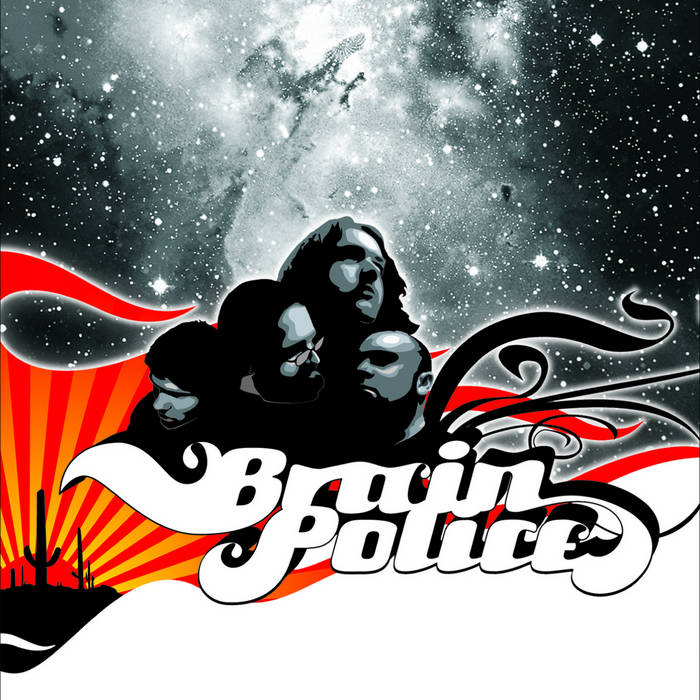
Retrospective: Brain Police - st. (2003)

These days, there’s not much real stoner rock coming out. I’m not saying there aren’t enough new releases, but there’s very little that feels raw and unpolished — the kind of stoner rock without unnecessary frills.
But honestly, why do we always need to chase the new when there are so many great stoner albums from the past?

Stoner rock is that rare genre that’s never current, yet never outdated — it’s timeless. That’s exactly why I’ve been spinning older records lately.

Brain Police is an Icelandic band, yet in the early 2000s they managed to capture the Generator Party spirit so perfectly that even the mighty Metallica asked them to open for their Iceland show!
The landscape around them might not be as hot as Death Valley — just a bit colder — but the vibe is strangely similar.

 Formed in 1998, Brain Police had already released Glacier Sun in 2000, but it was their self-titled 2003 album that really broke through. By then, they’d gone through a vocalist change, but that wasn’t what made the music more mature. It was the result of constant gigging, something I’d strongly recommend to a lot of up-and-coming Hungarian bands too.

The songs deliver pure, groove-driven stoner rock — every track is an adrenaline bomb.
The sound is analog, fuzzy, and dusty, just the way it’s written in the great stoner rock handbook.
Many pick Jacuzzi Suzy as their favorite, but if you really listen, there are even bigger songs hidden on the record.

Later releases like Electric Fungus (2004) shifted toward a more rock’n’roll-based direction — a great record, but no longer that vegytisztán stoner rock vibe. Their final album, Beyond the Wasteland (2006), leaned further into psychedelia.

Back in its day, I’d say Brain Police – s/t easily stood among the Top 10 stoner albums in the world.
If you don’t believe it — eat a hedgehog. 

Link to a previous article:https://stoner.blog.hu/2008/11/28/visszatekintes_brain_police_glacier_sun_2000
AMEN!

https://www.facebook.com/BrainPoliceIceland/ 

https://www.facebook.com/smallstonerecords

Riding the Greek Desert: 1000mods - Super Van Vacation

The debut album of Greek band 1000mods, Super Van Vacation, is a landmark in stoner rock, presenting one of the universal flagbearers of the genre. Released in 2011 by Kozmik Artifactz / CTS Productions on CD, vinyl, and digital formats, it immediately drew international attention among stoner rock fans.

The album features ten tracks, including “Vidage,” “Road to Burn,” and the title track “Super Van Vacation,” filled with raw, fuzz-heavy riffs, massive grooves, and psychedelic desert vibes. The songs feel diverse yet cohesive, as if they were crafted spontaneously during a long road trip in a Super Van. The album is instinctive, fierce, and pulsating, capturing the band’s energy in full force.

Critics have highlighted the album’s clean yet gritty production (engineered by Billy Anderson) and its visual concept, with artwork inspired by 1970s psychedelic art, providing a complete sensory experience. Super Van Vacation is more than just a debut—it laid the foundation for Greek stoner rock, showing that bands from Greece could expand the genre, enrich it with their own identity, and simply play music freely, regardless of style.

This release introduced a powerful stoner band, proving that the Greek stoner scene had its own desert—crafted from grooves, instinct, and raw energy. The album’s spontaneous, instinct-driven flow still resonates today, securing its place among stoner rock classics. AMEN!

https://www.facebook.com/1000mods

Retrospective: Down - NOLA (1995) Rising from the Swamps of the South;

As a young adult, I was searching for my place in the musical world, which in the mid-to-late '90s could easily feel overwhelming. Grunge was fading, metal was exploring new directions, while Korn, Deftones, Sepultura's Roots, and successive Kyuss releases were shaking up the scene. On the alternative rock side, bands like Smashing Pumpkins, Foo Fighters, Radiohead, Bush, and Silverchair were pushing their sound in every direction. In Europe, black metal was at its peak, and the Gothenburg sound was breaking new ground. Amid this vibrant musical landscape, I stumbled upon an article about Down's NOLA album. It was intriguing to read that this was a supergroup, whose members I already knew and admired, and that beneath its emotional depth, the songs carried immense power. Every track felt destined to become a classic – and time proved it right.

I walked out and bought the cassette. When I popped it into my Walkman, I was hit simultaneously by the force of the newness and the familiar undertones. The combination was lethal. The sound was gritty, smoky, and atmospheric, while the monolithic riffs shattered my eardrums! This wasn’t the kind of album you needed multiple listens to appreciate – it hit instantly, like intravenous vodka.

Yet, NOLA stands not only as a personal experience but also as a historical landmark. When it was released in 1995, the metal scene was in flux. Down united the South’s biggest names: Phil Anselmo (Pantera), Pepper Keenan (Corrosion of Conformity), Kirk Windstein (Crowbar), Jimmy Bower (Eyehategod), and Todd Strange, creating a sound that was heavy yet breathing. The deep-tuned guitars, the southern rock grooves, the sludge-infused anger, and the introspective melancholy all converged to reach a climax in tracks like “Stone the Crow.” The production is raw by design, as if recorded in a humid, smoky garage filled with whiskey-soaked air.

The album bridged different subgenres: Pantera’s groove metal weight, Crowbar’s massive riffs, and Eyehategod’s psychotic grime merged into an emotionally introspective language. In doing so, Down established the southern sludge school, which later influenced bands like Acid Bath, Weedeater, Bongzilla, and even later acts like Red Fang and High on Fire.

But NOLA is significant not only musically: it is a manifesto of honesty, of depression, grief, and self-reflection from an environment where pain is usually drowned in beer and heavy riffs. That’s why it still resonates today – because it is built not around a moment in time, but around a feeling. Down’s debut stands alongside Kyuss – Welcome to Sky Valley and Corrosion of Conformity – Deliverance as a cornerstone of ’90s heavy music. An album that doesn’t just play – it lives, breathes, and in its smoky, swampy essence, has etched itself permanently into the history of modern rock. AMEN!

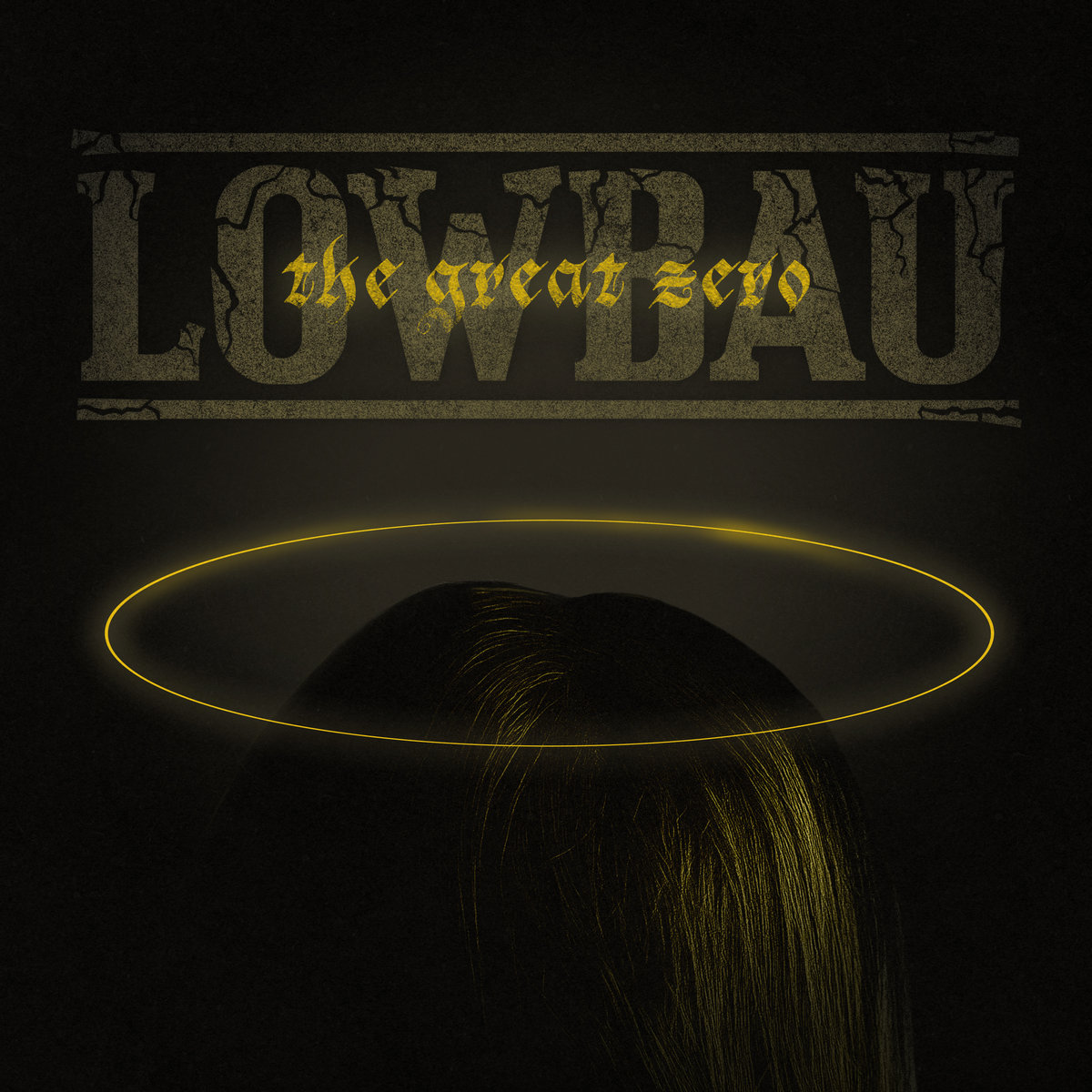
LOWBAU – The Great Zero (2025, Electric Fire Records)

I've been spinning a lot of Lowbau records lately, but this new EP hits differently. The Great Zero has been on my daily playlist since its release — and the opening track, Holy Drones, often gets more than one play in a row. That thick, full, raw sound just pins you to the chair — it’s the kind of energy that makes you turn the volume up without even realizing it.

Released on July 4th, 2025, via Electric Fire Records, The Great Zero features three tracks — Holy Drones, Cosmic Cowboy, and Symphony of Diversity — and it feels like the Austrian sludge/stoner metal outfit’s most ambitious release to date. Each song builds its own world, yet they’re all tied together by a dark, conceptual thread.

Holy Drones opens like a ritual — a hymn to blind obedience and faith turned mechanical. Cosmic Cowboy is a hellish western in space, where even the gods draw their guns. Symphony of Diversity dives into themes of false unity, social conditioning, and the struggle for individuality — lyrically and musically one of their strongest works.

The sound throughout is massive and organic — no overpolished edges, no artificial shine. The drums thunder, the guitars snarl, the bass throbs, and the vocals strike a perfect balance between anger and emotion. You can feel that this wasn’t made to be “perfect” — it was made to be real.

 This EP shows a new face of stoner rock — one that doesn’t try to fit in or look back nostalgically, but still respects its roots. The Great Zero might just represent one of the genre’s future directions: heavy, thoughtful, and instinctive all at once. AMEN!

https://www.facebook.com/LOWBAU

https://www.facebook.com/electricfirerecords


süti beállítások módosítása