Default style- Alternative style

Hermano Returns to Europe – Interview with Dandy Brown About the Past and the Future

Hermano has entered a new and active phase again in recent years. The band’s classic albums have been remixed and reissued, and a few fresh songs and studio recordings have also surfaced. In the spring of 2026, the group will return to Europe, performing in several cities — including Vienna — much to the delight of their fans.

Hermano’s founder, Dandy Brown, is not only the driving force behind the band but also one of the defining figures of desert rock. As a producer, songwriter, and musician, he remains active in several projects — most recently contributing to the debut album of Lorquin’s Admiral, a record featuring members of Luna Sol, Yawning Sons, and Sons of Alpha Centauri, perfectly blending the emotional depth of stoner and desert rock with the psychedelic atmosphere of the ’90s.
(*We previously wrote about the Lorquin’s Admiral debut album here: https://stoner.blog.hu/2025/07/05/supergroup_rising_lorquin_s_admiral_and_the_return_of_desert_rock_majesty.)

Now, we turn our attention back to Dandy’s most recognized band — Hermano — to talk about the past, the present, and what keeps this group alive and inspired more than twenty-five years later.


Hermano has been getting a lot of attention again lately. What inspired this renewed activity and energy around the band?

Brown: First of all, thank you for your interest in the music and for all you do to support the bands you enjoy. We certainly wouldn’t be able to get the word out on what we are up to without folks like you who enjoy what we create and let others know about it . . . so, thank you very much.

One of the most wonderful things about Hermano is the lack of pressure any of us feel to do anything other than what we want to do when we want to do it.  That has always been one of the most attractive and interesting things about what we do as a band.   While we have worked together as a group for the last 27 years, there have always been relatively long stretches where we haven’t done anything musically together at all.  The most important thing to us has always been the friendships we have with each other and the support that we give to each other whenever one of us is doing a project outside of Hermano . . . and there are always a lot of projects that we are all involved with. 

It is definitely a tremendous thing that we have found an open window of opportunity over the last few years to come back together for some new music, remixing and remastering our catalog, and being able to find time to get out and do a batch of performances.  It has also been inspiring to find that there is still quite a bit of interest in Hermano after not being very active over the last decade.  I mean, Hermano has never disbanded or called it quits at any point, and I think we have always been comfortable with coming to the table knowing that we do everything on our terms and not because we feel any pressure from an industry standpoint.  

So, to give you the brief answer to your question, we are immensely grateful for the opportunity to get out and do a handful of shows in the spring of 2026, and for all the continued interest in Hermano.  That alone is always an inspiration to continue doing what we do.  We definitely are going to have an awesome time hanging out and playing music together, and we are certain that those who are able to come out and see us are going to be pulled into the fun.  

Looking back, how do you see the creative chemistry between you, John, and the other members — what made Hermano unique compared to your other projects?

Brown: Every group has its own dynamics for sure. I’m not sure how to define Hermano’s unique chemistry, though. Perhaps one of the most unique things about the band is that the first time everyone met was when I brought them all into the studio for the recording of Only a Suggestion.   While John and Dave knew each other from the brief time they had spent on the same label in the early 90’s, Steve Earle and Mike Callahan had never met either John or Dave.   So, you can imagine just how amazed we all were regarding the instant musical bonds that developed between us.  Honestly, when I first wrote the initial riffs that would become the foundation for the first album, I knew that the people I had chosen to play on the record would take the demos I made to extraordinary new heights.  What I hadn’t predicted, though, were the strong bonds of friendship that immediately developed between us and have lasted for well over twenty seven years.     

The albums ...Only a Suggestion, Dare I Say..., and ...Into the Exam Room each have their own distinct character. Is there one that represents Hermano’s spirit the most for you personally?

Brown: Man, every album that we have done is filled with special moments and terrific memories, but certainly the first Hermano album will always hold a very important place in my heart. Looking back on Only a Suggestion, it was such a unique moment in time that we were able to capture during that session, and definitely for me it was a time when so many things in my life were both ending and starting. I don’t mean to diminish any of the events we have experienced along the journey with Hermano because there are songs on every album that resonate with me on numerous levels.   What we discovered during the sessions for Only a Suggestion, though, set the foundation for everything that we would do afterward.

Hermano has a European tour coming up in 2026. What can fans expect from these upcoming shows?Brown: I can’t think of any batch of shows that we have ever done when we didn’t bring everything we’ve got to the stage. That’s just what this band does and I think that anyone who has ever attended one of our shows sees the genuine love we have for performing together. Of course, we are going to play a broad selection of songs from all of our albums, and, of course, a few new songs that we’ve had the opportunity to release over the last couple of years.   I believe that if you ask anyone who has ever attended a Hermano show what it was like, they would tell you that the love we have for performing together is absolutely contagious and that it is an experience of being immersed in both powerful rock music and watching a band that absoutely loves having the opportunity to entertain everyone who comes to see us.

Let’s go back to the very beginning — what made you start Hermano in the first place? What were the emotions or musical ideas that pushed you to create this band?

Brown: Toward the end of the 1990s, it just so happened that I suffered a broken ankle that laid me up in a cast for a couple of months. During that time, I spent quite a while sitting in my apartment in Covington, Kentucky, with a Les Paul and a four-track recorder. I ended up recording a batch of heavy blues riffs that I thought sounded pretty cool, and I began to daydream about a lineup that I imagined would make the songs sound enormous.  Really, on a total whim, I decided to reach out to those musicians, and see if they would be interested in coming into my studio to record the songs.  That, of course, would eventually develop into Hermano.  Honestly, there wasn’t much more to how I put it all together than that. 

You’re involved in so many projects, plus family life — how do you find the time and energy for everything? It feels like your days must have at least 30 hours!

Brown: I can’t recall any part of my life where I wasn’t interested in creating something. That outlook has really been the central focus of my life and how I have always projected my energy. I have been extremely lucky to have been surrounded by people with the same perspective, so it isn’t as though I’m having to sacrifice other things in order to make art.  It’s just what I enjoy doing.  To tell you the truth, I often feel guilty when I’m not using the time I’m given in this existence to create something.  I am also very fortunate to have a spouse who views life the same way.  Dawn and I are entirely simpatico in our views about art and music, so there’s never any conflict regarding how we want to dedicate our time and our lives.   I mean, it’s not as though we have to conjure up the energy to focus upon our art.   It’s just who we are and how we act upon the compulsion that resides within us.


After all these years, how has your attitude toward music and creativity changed — both musically and on a more personal, emotional level?

Brown: I don’t think my attitudes and emotions toward music and creativity have changed at all. I still love creating and performing, so I don’t imagine my outlook about art will ever change. The things that do change for all of us, though, are the elements of our physical existence and the limitations that time and age throw our way.  Even as the light begins to dim and the window begins to close, though, I will be toying around with more riffs, or trying to write something interesting, or looking for unique colors in the sunrise and sunset.   I simply cannot imagine living any other way.

AMEN!
/https://www.facebook.com/dandy.brown/

https://www.facebook.com/theripplemusic/

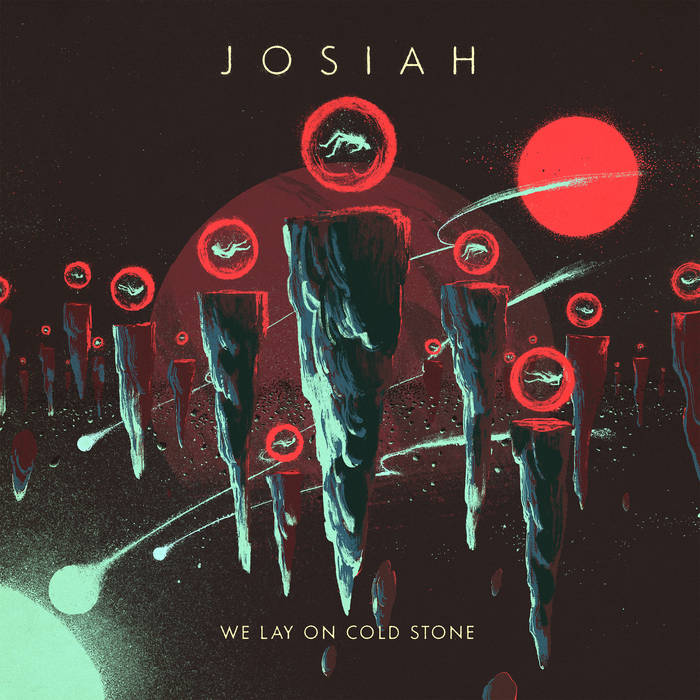
Josiah – We Lay On Cold Stone (2023)

 To truly understand and appreciate Josiah’s We Lay On Cold Stone, you need to hear the earlier records or at least place it in context with the rest. It’s not an easy listen, but precisely because of that, it offers something deeper than just a groove-oriented album you play while drinking beer. This record comes from a much deeper place where fuzz no longer measures the weight of the riffs, but the passage of time itself.

 In the early-to-mid 2000s, the trio of Matthew Bethancourt (guitar, vocals), Sie Beasley (bass), and Chris Jones (drums) built their sound around thick riffs and heavy grooves. I’m deliberately not calling it stoner rock, though it certainly was back then; yet, thanks to Matthew, there was already a hint of something more expansive—something the rhythm section held perfectly in balance. The first albums (Out of the First Rays, Into The Outside) showed a tight, powerful trio in full command of their craft.
 By the time No Time (2007) arrived, Josiah was at its creative peak everything was in place: fuzz, energy, dynamics, and that raw, instinctive force that defined them.
And then, the momentum suddenly broke. The band was preparing for a Rockpalast tour when Bethancourt pulled the plug. As he later said, “We weren’t doing the music justice.”

 Procession (2010) became a kind of closure a collection of unreleased studio cuts, a Buffalo cover, and a few live tracks from Sweden. Fans could only guess: was this a pause or the end? In truth, the band had already let go of the idea of continuing. Bethancourt didn’t stop making music he simply switched languages.
In the following years, he began working from his own home studio, which led to The Kings of Frog Island and later Cherry Choke. The physical power of stoner rock was replaced by psychedelic atmosphere, texture, and inward exploration. If Josiah was the body, then The Kings of Frog Island was the soul. The focus shifted from riff-driven energy to mood, echo, hazy vocals, and floating guitar textures. Bethancourt was gradually moving away from his former self, becoming more mature and self-aware in the process.

Through home recording, he gained not only technical freedom but also emotional independence the kind of introspection that ultimately culminated in We Lay On Cold Stone. The album was largely created in Bethancourt’s home studio, with Sie Beasley and DC Lockton handling the rhythm section a natural continuation of the sound he had refined in previous projects. Released by Blues Funeral Recordings as part of the PostWax Vol. II series in 2021, and later reissued by Heavy Psych Sounds in 2023, it marked Josiah’s return not as a repetition of the past, but as its release.

The opening track, Rats, perfectly symbolizes this transition. It’s the only song that still carries the old Josiah pulse: the tight, cyclical riff, the heavy bassline, and that driving energy the band once thrived on. It feels as if Bethancourt deliberately wanted to summon his former self one last time before letting it go. The song is short, direct, and built on classic Josiah structures but the sound has changed. The drums are dry, the guitars restrained, the vocals more tired, deeper, and more honest. It’s not about triumph anymore it’s about acceptance. “I know what was and now I say goodbye.” Rats is like a door opening one final time toward the past, only to close for good.
Through this song, Bethancourt seals off the unfinished chapter that Procession left hanging.

After Rats, the album trades groove for weight and introspection. The riffs don’t attack they float.
The drums no longer push forward they hold back. We Lay On Cold Stone feels like a ritual, not a new beginning but a final resonance. Bethancourt’s voice reaches deeper than ever before; the fuzz no longer radiates power, but time and distance. This Josiah isn’t about tearing down club walls anymore it’s about making peace with its own past.

So We Lay On Cold Stone isn’t the grand comeback album that role belongs more to the rechtaW EP.
It’s rather an answer to the challenge left by No Time a kind of spiritual sibling record, drawn from the same source but speaking in a different voice: more tired, wiser, and more honest.
It’s much more a sonic document of closure where every riff is a memory, and every pause, a confession. AMEN!

https://www.facebook.com/bluesfuneral/

https://www.facebook.com/HEAVYPSYCHSOUNDS

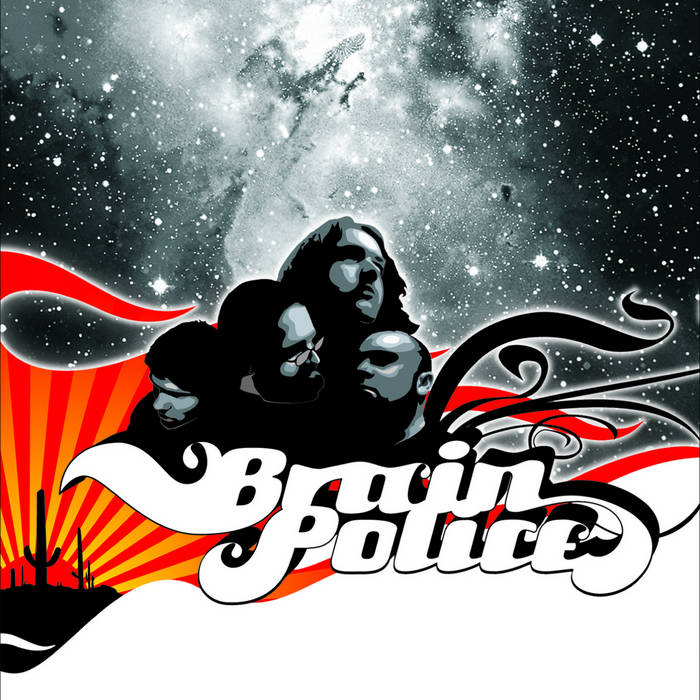
Retrospective: Brain Police - st. (2003)

These days, there’s not much real stoner rock coming out. I’m not saying there aren’t enough new releases, but there’s very little that feels raw and unpolished — the kind of stoner rock without unnecessary frills.
But honestly, why do we always need to chase the new when there are so many great stoner albums from the past?

Stoner rock is that rare genre that’s never current, yet never outdated — it’s timeless. That’s exactly why I’ve been spinning older records lately.

Brain Police is an Icelandic band, yet in the early 2000s they managed to capture the Generator Party spirit so perfectly that even the mighty Metallica asked them to open for their Iceland show!
The landscape around them might not be as hot as Death Valley — just a bit colder — but the vibe is strangely similar.

 Formed in 1998, Brain Police had already released Glacier Sun in 2000, but it was their self-titled 2003 album that really broke through. By then, they’d gone through a vocalist change, but that wasn’t what made the music more mature. It was the result of constant gigging, something I’d strongly recommend to a lot of up-and-coming Hungarian bands too.

The songs deliver pure, groove-driven stoner rock — every track is an adrenaline bomb.
The sound is analog, fuzzy, and dusty, just the way it’s written in the great stoner rock handbook.
Many pick Jacuzzi Suzy as their favorite, but if you really listen, there are even bigger songs hidden on the record.

Later releases like Electric Fungus (2004) shifted toward a more rock’n’roll-based direction — a great record, but no longer that vegytisztán stoner rock vibe. Their final album, Beyond the Wasteland (2006), leaned further into psychedelia.

Back in its day, I’d say Brain Police – s/t easily stood among the Top 10 stoner albums in the world.
If you don’t believe it — eat a hedgehog. 

Link to a previous article:https://stoner.blog.hu/2008/11/28/visszatekintes_brain_police_glacier_sun_2000
AMEN!

https://www.facebook.com/BrainPoliceIceland/ 

https://www.facebook.com/smallstonerecords

Riding the Greek Desert: 1000mods - Super Van Vacation

The debut album of Greek band 1000mods, Super Van Vacation, is a landmark in stoner rock, presenting one of the universal flagbearers of the genre. Released in 2011 by Kozmik Artifactz / CTS Productions on CD, vinyl, and digital formats, it immediately drew international attention among stoner rock fans.

The album features ten tracks, including “Vidage,” “Road to Burn,” and the title track “Super Van Vacation,” filled with raw, fuzz-heavy riffs, massive grooves, and psychedelic desert vibes. The songs feel diverse yet cohesive, as if they were crafted spontaneously during a long road trip in a Super Van. The album is instinctive, fierce, and pulsating, capturing the band’s energy in full force.

Critics have highlighted the album’s clean yet gritty production (engineered by Billy Anderson) and its visual concept, with artwork inspired by 1970s psychedelic art, providing a complete sensory experience. Super Van Vacation is more than just a debut—it laid the foundation for Greek stoner rock, showing that bands from Greece could expand the genre, enrich it with their own identity, and simply play music freely, regardless of style.

This release introduced a powerful stoner band, proving that the Greek stoner scene had its own desert—crafted from grooves, instinct, and raw energy. The album’s spontaneous, instinct-driven flow still resonates today, securing its place among stoner rock classics. AMEN!

https://www.facebook.com/1000mods

Retrospective: Down - NOLA (1995) Rising from the Swamps of the South;

As a young adult, I was searching for my place in the musical world, which in the mid-to-late '90s could easily feel overwhelming. Grunge was fading, metal was exploring new directions, while Korn, Deftones, Sepultura's Roots, and successive Kyuss releases were shaking up the scene. On the alternative rock side, bands like Smashing Pumpkins, Foo Fighters, Radiohead, Bush, and Silverchair were pushing their sound in every direction. In Europe, black metal was at its peak, and the Gothenburg sound was breaking new ground. Amid this vibrant musical landscape, I stumbled upon an article about Down's NOLA album. It was intriguing to read that this was a supergroup, whose members I already knew and admired, and that beneath its emotional depth, the songs carried immense power. Every track felt destined to become a classic – and time proved it right.

I walked out and bought the cassette. When I popped it into my Walkman, I was hit simultaneously by the force of the newness and the familiar undertones. The combination was lethal. The sound was gritty, smoky, and atmospheric, while the monolithic riffs shattered my eardrums! This wasn’t the kind of album you needed multiple listens to appreciate – it hit instantly, like intravenous vodka.

Yet, NOLA stands not only as a personal experience but also as a historical landmark. When it was released in 1995, the metal scene was in flux. Down united the South’s biggest names: Phil Anselmo (Pantera), Pepper Keenan (Corrosion of Conformity), Kirk Windstein (Crowbar), Jimmy Bower (Eyehategod), and Todd Strange, creating a sound that was heavy yet breathing. The deep-tuned guitars, the southern rock grooves, the sludge-infused anger, and the introspective melancholy all converged to reach a climax in tracks like “Stone the Crow.” The production is raw by design, as if recorded in a humid, smoky garage filled with whiskey-soaked air.

The album bridged different subgenres: Pantera’s groove metal weight, Crowbar’s massive riffs, and Eyehategod’s psychotic grime merged into an emotionally introspective language. In doing so, Down established the southern sludge school, which later influenced bands like Acid Bath, Weedeater, Bongzilla, and even later acts like Red Fang and High on Fire.

But NOLA is significant not only musically: it is a manifesto of honesty, of depression, grief, and self-reflection from an environment where pain is usually drowned in beer and heavy riffs. That’s why it still resonates today – because it is built not around a moment in time, but around a feeling. Down’s debut stands alongside Kyuss – Welcome to Sky Valley and Corrosion of Conformity – Deliverance as a cornerstone of ’90s heavy music. An album that doesn’t just play – it lives, breathes, and in its smoky, swampy essence, has etched itself permanently into the history of modern rock. AMEN!

süti beállítások módosítása